
Last updated October 16, 2026
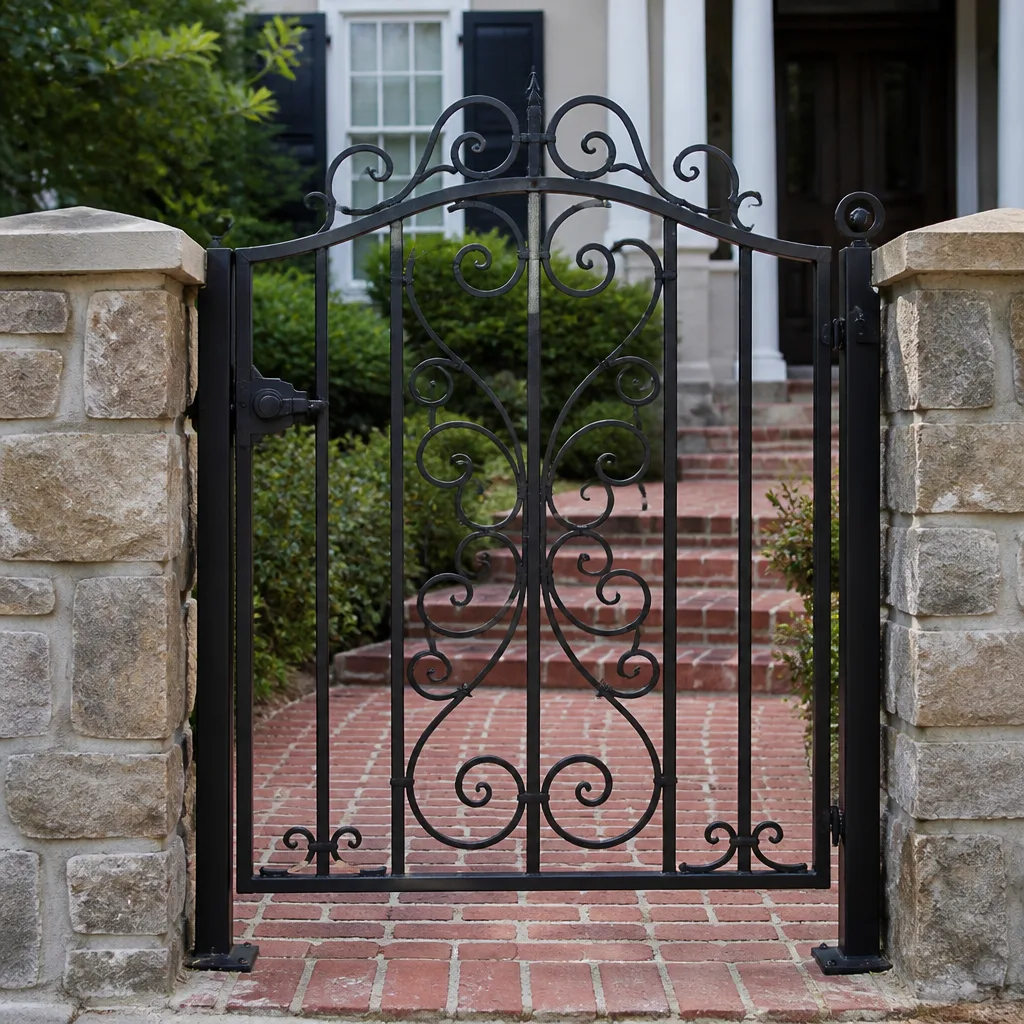 Wrought iron
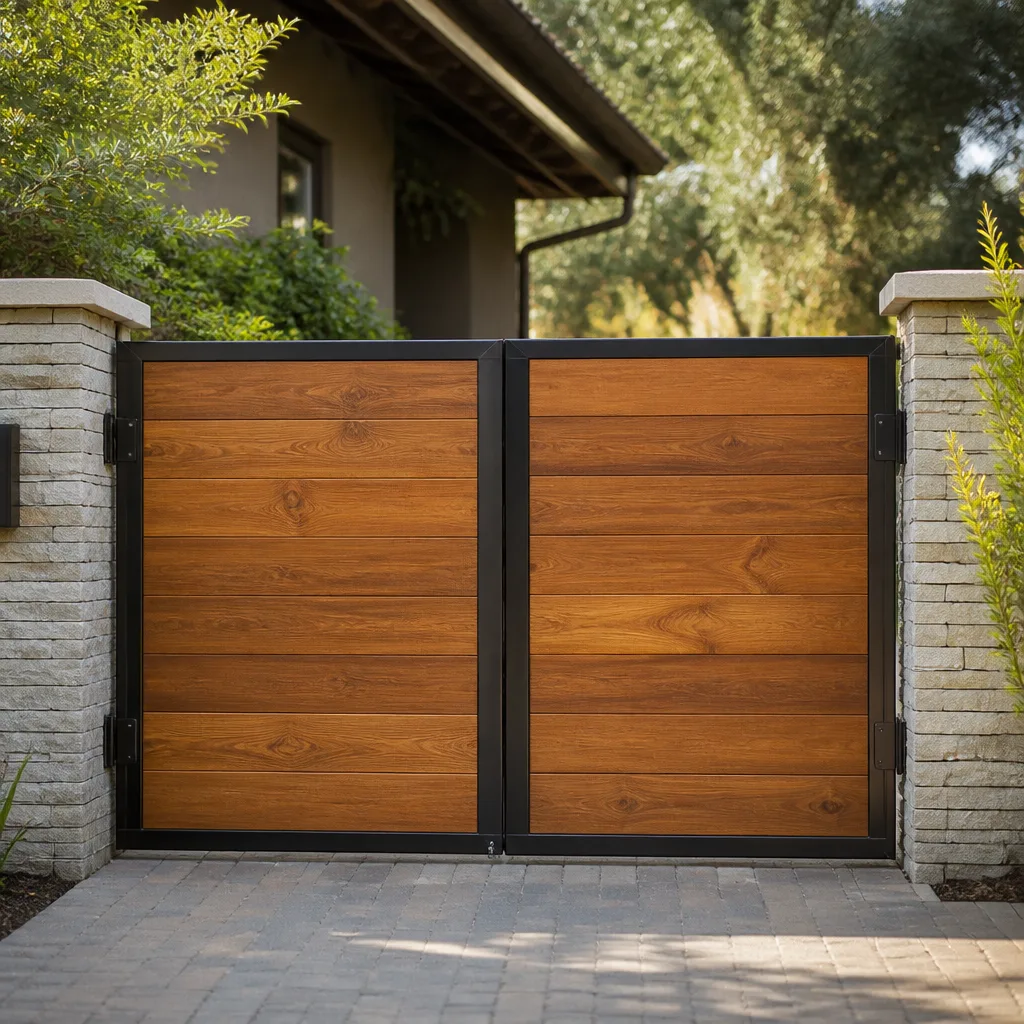 Wood & steel frame
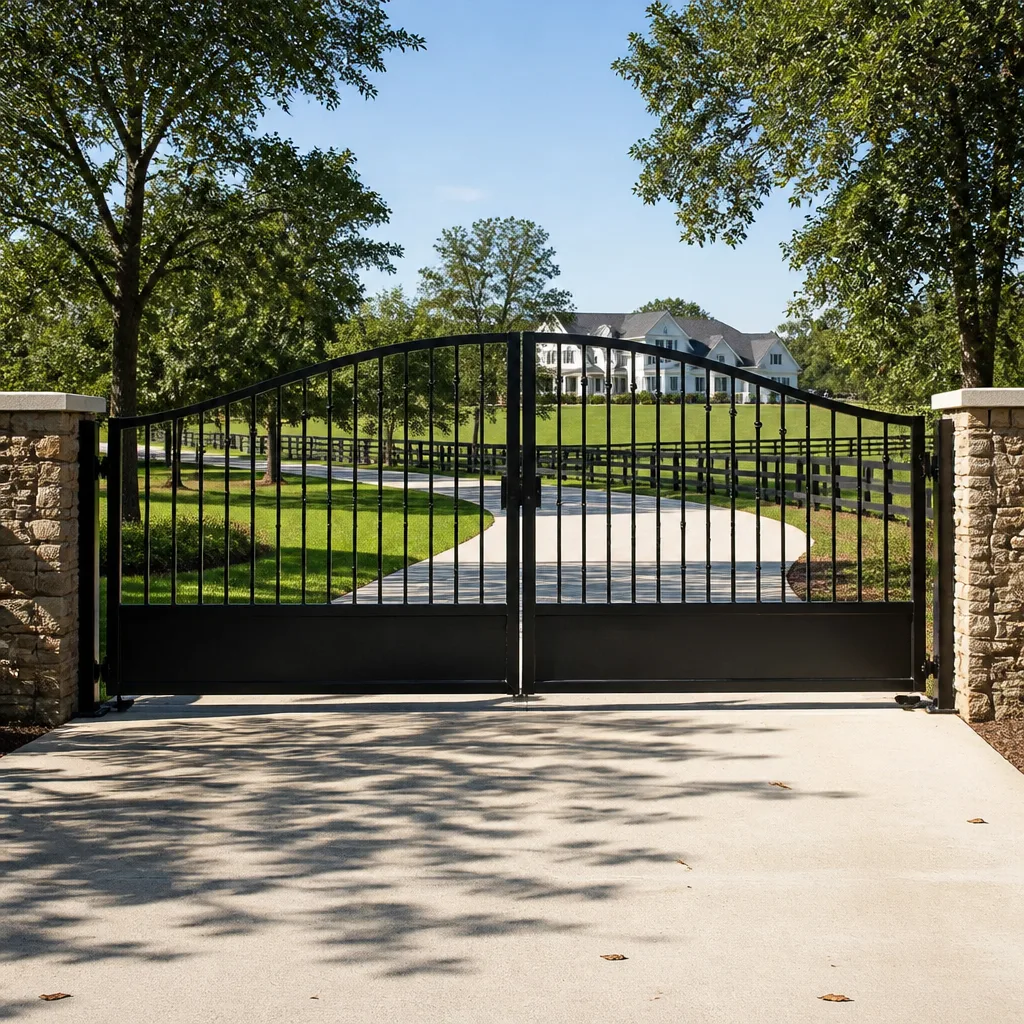 Farm & ranch
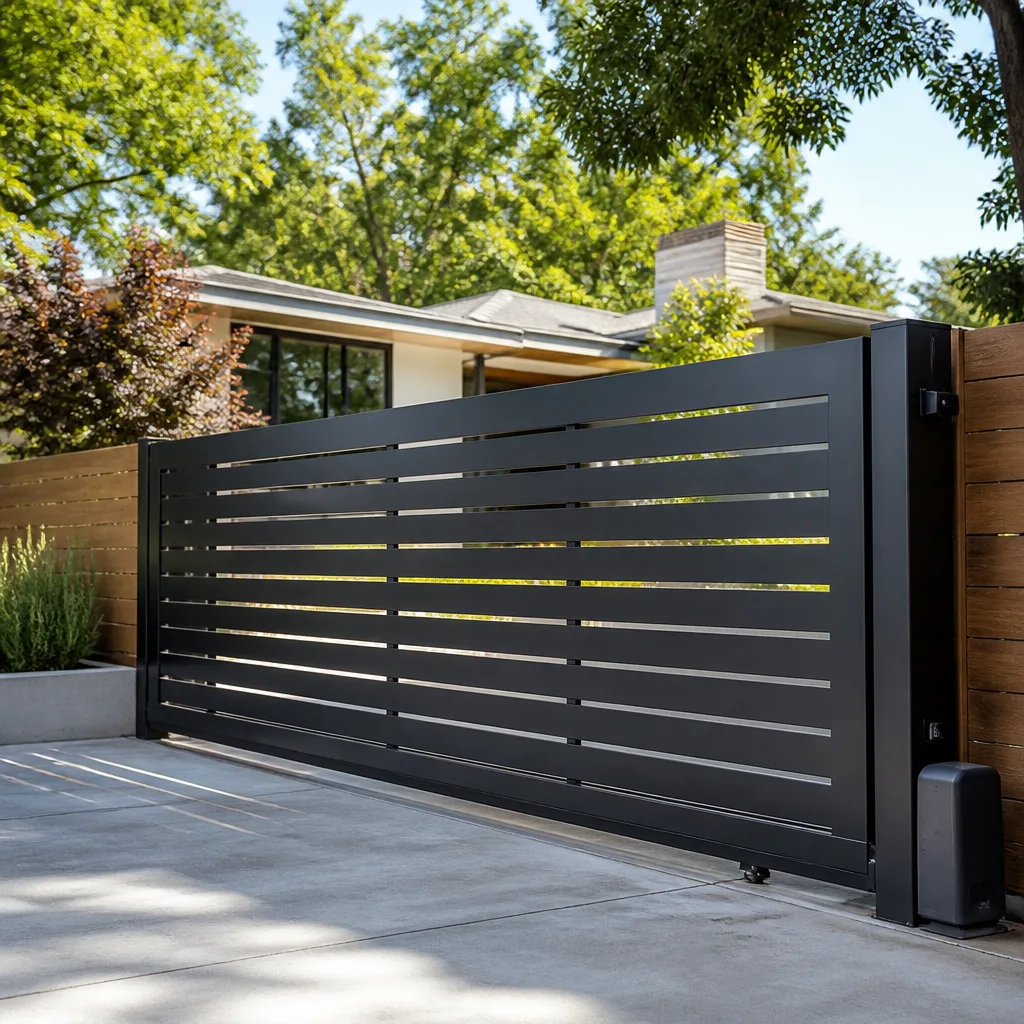 Sliding driveway gates
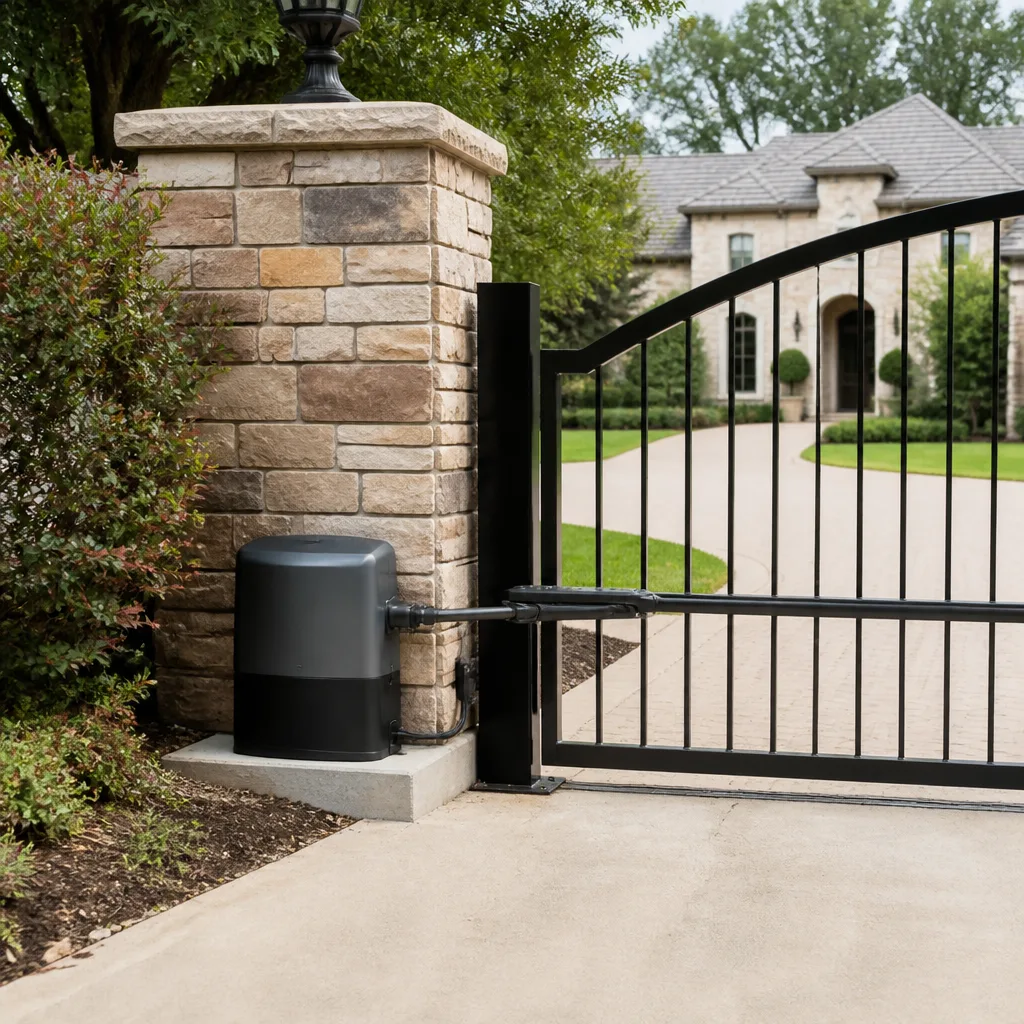 LiftMaster operators
Free on-site gate assessment - hinges, posts, and your LiftMaster or Nice gate operator checked before anything is quoted
The assessment is free and the quote is the invoice.
Get your free estimateGate Repair Warning Signs: A Las Vegas Homeowner’s Reference Guide
A gate that hesitates for two seconds before moving is not “just getting old.” It’s a motor working at the edge of its amp draw, and in Las Vegas summer heat, that two-second hesitation typically becomes a full failure within 60 days. We’ve watched hundreds of Las Vegas gates limp through their final weeks because the early warnings hid in plain sight. This guide teaches you to read those signals three to six months before the gate strands you on either side of it. You’ll learn which signs are merely cosmetic, which ones demand a Gate Repair call this week, and how to talk to a technician so the repair happens right the first time.
Quick Answer
The most reliable gate repair warning signs in Las Vegas are a gate that hesitates before moving, gets slower over several weeks, or makes a grinding or popping sound in motion. Heat accelerates every one of these failures, turning a minor issue in May into a dead operator by July. If your gate hesitates, bangs shut, or sounds different than it did last month, have it inspected before the next heat wave.
Styles & brands we work with
Table of Contents
- Two-Second Hesitation: The Motor Warning Most Homeowners Miss
- Slow Gate: Motor Drag vs. Mechanical Drag and the Hand Test
- Rust “Tea Staining” and What It Reveals About Weld Integrity
- Post Lean: Caliche Heave vs. Stable Cosmetic Settling
- Slide Gate V-Groove Wheels: The Sound of Impending Failure
- Works in the Morning, Fails in the Afternoon: Heat-Related Electrical Failure
- What Gate Repair Costs in Las Vegas
Two-Second Hesitation: The Motor Warning Most Homeowners Miss
The plainest early warning on any automatic gate is a pause between the time you press the remote and the moment the gate actually begins to move. It’s easy to write off. The remote battery is old, the receiver is slow, whatever. But that pause is often the operator drawing more current than it should, fighting against drag somewhere in the system. The motor is telling you it’s working harder than it was designed to.
In Las Vegas, this warning carries extra weight. Heat increases electrical resistance in motor windings, and a motor already pulling high amps in spring may not survive its first 110-degree week. We routinely see gates that hesitate mildly in April and fail completely by the first week of June. The overheating is cumulative; each hard start degrades the windings a little more.
Here’s the thing to understand: a healthy gate operator responds to a remote command within a fraction of a second, every single time. If the delay is consistent, it’s the system. If the delay comes and goes, it could be a receiver or capacitor issue, but it’s still worth checking. Either way, a gate that hesitates is a gate that’s losing the fight.
Slow Gate: Motor Drag vs. Mechanical Drag and the Hand Test
A gate that moves noticeably slower than it did a year ago can be failing for two very different reasons. One is motor drag: the operator itself is weakened, drawing too much current to produce the same movement. The other is mechanical drag: the gate is physically harder to push or roll, so the motor has to fight the hardware. Knowing which one you have changes the repair call entirely. A motor swap fixes the first; the second may need wheel, hinge, or track work.
There’s a simple hand test that answers the question. First, disconnect the operator. Most automatic gate operators have a manual release lever or key; ours and every major brand we service, including DoorKing and Elite, make this release accessible for exactly this reason. Then push the gate by hand along its full travel path.
If it glides smoothly with one hand, the problem is the motor. If it feels like you’re pushing a loaded wheelbarrow through wet sand, the problem is mechanical. The gate should move with consistent resistance from closed to open and back. A gate that’s stiff at one point in the travel means a wheel, hinge, or track issue at that specific spot. A gate that’s stiff everywhere means something systemic, like a gunked-up v-groove or failing bearings at both ends.
In Las Vegas, mechanical drag often comes from dust and grit. Our fine desert sediment gets into roller bearings, hinge pins, and slide tracks, and it does more damage over a summer than rain does in most other climates. The sediment acts as a grinding compound, wearing surfaces that would otherwise move friction-free for a decade.
If the hand test points to the motor, expect an operator swap on most residential gates. For swing gates, most actuator replacements, meaning the motorized arm that physically pushes the gate open, run between $700 and $1,700 depending on the brand and weight of the gate. Slide gate operators run similar, $850 to $2,200 installed, with Ghost Controls and Mighty Mule units on the more affordable end of that range and heavier commercial-grade operators higher. If the hand test points to mechanical drag, wheel and hinge work is typically $175 to $600 depending on how many components have worn.
Rust “Tea Staining” and What It Reveals About Weld Integrity
Walk the concrete under your wrought iron gate after a rain or a heavy irrigation cycle. If you see rust-colored streaks running down from the gate and pooling on the slab, that’s called tea staining in the trade. It means water is getting inside the hollow iron pickets and running out through a seam or pinhole. And a pinhole almost always sits at or near a weld.
Here’s the part most homeowners don’t realize: tea staining is not always advanced rust. Sometimes it’s a fresh weep hole doing its job, or superficial oxidation from hard Vegas water. But when it appears suddenly on a gate that never stained before, or when the staining concentrates at a specific joint, it’s telling you water has found a path through a seam, and that seam is structurally relevant.
Wrought iron gates in Las Vegas live a strange double life. The air is so dry that severe rust is rare compared to coastal cities. But the irrigation water we put on our landscaping is hard and often travels as mist across gate surfaces, then dries leaving mineral residue that holds moisture against the metal. It’s a slow, patient corrosion, and it starts at the welds because welds are more electrically active than the surrounding steel. Galvanic corrosion eats the joint from the inside out while the powder coat looks fine.
Here’s how to tell whether a tea stain is worth a professional look. First, pinch the metal around the stain. If paint flakes away and reveals red rust powder underneath, you’ve got active corrosion. Second, tap along the bottom rail with a metal tool or a screwdriver handle. Solid steel rings; corroded steel sounds hollow or dull. Third, look at the stain’s location. Staining at the bottom of pickets near a horizontal rail is normal drainage. Staining from the middle of a picket or from a decorative scroll attachment means water is working through a weld, and that’s structural. If a weld fails on a moving gate, the section can drop under its own weight and bind the whole panel.
Post Lean: Caliche Heave vs. Stable Cosmetic Settling
A gate post that’s a little off plumb has either moved recently or it hasn’t. The distinction matters a lot. A post that settled years ago and hasn’t budged since is cosmetic; leave it alone. A post that’s actively moving will keep tilting, and if it tilts far enough, the gate binds and the hinges or wheels start wearing in catastrophic ways.
In Las Vegas, the wind and the caliche make this more complicated than in most cities. Caliche is the hardpan calcium carbonate layer that sits a few feet under much of our valley floor. It’s so dense that roots grow along the top of it instead of through it, and when the soil above it gets wet and dry and wet and dry, the whole soil mass can heave and shift. Post footings that were poured into shallow, poorly drained holes get pushed around by that heave. We see it in the northwest valley around Lone Mountain and in the deeper soil pockets east of the 95. The telltale sign of caliche-induced heave is a post that leans out of vertical but has no visible cracking in the surrounding concrete. The entire footing is moving, not just the post inside it.
A cosmetic lean stays the same year after year. An active lean keeps growing. Here’s a field test you can run over a few months: measure the gap between the gate and the latch post at the top when the gate is closed. Write the measurement down with a piece of tape or a pencil mark on the gate itself. Check it again in six weeks. If the gap changed by more than a quarter inch, the post is moving. If it’s the same, you have a stable lean and can leave it.
Also look at the soil at the post base. Cracks radiating out from the footing, a depression forming on one side, or soil that’s pulling away from the concrete all point to active movement. Call a gate company for an evaluation if you find them. Re-setting a moving gate post typically costs $400 to $1,100 in Las Vegas depending on how much concrete has to be cut and how much new footing has to be poured.
Slide Gate V-Groove Wheels: The Sound of Impending Failure
Slide gates ride on wheels and a track, and the wheels are the part that fails most often. The most common wheel style is the v-groove wheel, so called because the wheel has a V-shaped groove cut into its face that rides along an inverted V-shaped rail. When the wheel is healthy, the gate glides almost silently.
Sound is your diagnostic tool here. Normal operational noise from a slide gate is a low rolling sound, like a distant train. It’s consistent, soft, and doesn’t change from the open end to the closed end of travel. The warning sound is different. A v-groove wheel that’s starting to crack produces a rhythmic thump-thump-thump as the cracked section comes around with each rotation. It’s not constant; it’s a beat. You can count it. The beat lines up with the wheel circumference, not the gate’s travel speed, so if you know what you’re listening for you’ll hear it every few seconds, not continuously.
A second warning sound is a higher-pitched squeal that happens only when the gate is at the far end of its travel. That’s usually the wheel fighting to stay on its rail because it’s lost material at the groove edge or the rail is misaligned. A third is a metallic clicking that comes and goes. That can be the beginnings of a flat spot on the wheel face, or debris embedded in the polyurethane that hasn’t cracked through yet.
In Las Vegas, slide gate wheels fail faster than in most markets because of two things: heat and dust. Heat softens the polyurethane or nylon wheel material, especially on gates that face west and soak up direct afternoon sun. Dust works into the wheel bearing from the open side, turning a smooth bearing into a grinder. We’ve replaced wheels with perfectly good tread but bearings roughly the consistency of coffee grounds.
The practical rule: if you can hear a rhythm, you have roughly 30 days before the wheel cracks through and the gate drops onto the rail, at which point it typically will not open or close without damage. V-groove wheel replacement in Las Vegas typically runs $180 to $450 including new bearings and alignment.
Works in the Morning, Fails in the Afternoon: Heat-Related Electrical Failure
This is the one that confuses people most. An automatic gate that opens fine at 7 a.m. and refuses to move at 3 p.m. feels like it should be an intermittent problem with a remote or a receiver. It’s not. In the vast majority of cases, it’s heat loading on an electrical component that only fails past a certain temperature.
The most common culprit is the capacitor, a cylinder-shaped electrical component inside the operator that stores the burst of energy needed to start the motor. Capacitors wear out gradually, and when they’re on their way out, heat pushes them past the edge. At 70 degrees the gate works because the capacitor still holds enough charge. At 105 degrees, the internal resistance climbs and the capacitor can’t deliver the starting jolt. The gate hums but doesn’t move, or it trips a breaker, or the operator’s thermal overload opens and the gate does nothing at all.
The second common culprit is the photocell system, the safety sensors near the ground on both sides of the gate. On a hot afternoon, the sun can hit a photocell at just the right angle and blind it, making the gate think something is in the way. The system refuses to close. This is especially common on west-facing entries in Summerlin and Henderson, where direct afternoon sun has a clean line at the sensor from roughly 2 p.m. to 6 p.m. all summer.
When you call a technician about this problem, describe the pattern precisely. Say: “The gate works in the morning, then stops after about 2 p.m., and it’s a humming sound with no movement when it fails,” or “The gate won’t close in the afternoon but opens fine; it acts like the safety beam is broken.” Those two sentences tell a technician, including ours at Gate Repair in Las Vegas, exactly which components to load in the truck. A capacitor repair typically runs $120 to $280. A photocell replacement is $95 to $200 usually. Both are same-visit fixes if the right parts are on hand.
What Gate Repair Costs in Las Vegas
Every gate repair in Las Vegas differs by brand, gate weight, and what’s actually failed. But you can expect a reasonable band for the most common fixes, and not one cent of this should surprise you, because any Portcullis job comes with a written price before work starts. Here’s what we see across the valley in a typical year:
- Swing gate actuator swap: $700 – $1,700 including labor
- Slide gate operator swap: $850 – $2,200 including labor
- V-groove wheel replacement: $180 – $450 per pair including alignment
- Hinge and weld repair: $175 – $600 depending on gate weight and damage
- Capacitor replacement: $120 – $280
- Photocell or safety edge repair: $95 – $200
- Post reset with new footing: $400 – $1,100
- Full gate installation, swing or slide: $2,500 – $8,000 depending on length, material, and operator brand
These are real ranges for Las Vegas work, but no guide can replace an actual diagnosis. The only number that matters is the one written on your quote before the repair starts. That’s the Kingswell way and it’s been ours since 2008. Every repair carries a written 365-day guarantee. If the same fix fails inside a year, we come back and make it right at no charge under the 365-Day Done Right Promise.
Common Mistakes to Avoid
- Lubricating the wrong component with the wrong spray. Spraying WD-40 into a v-groove bearing or an operator gearbox washes out the grease and causes rapid wear. The right lubricants are bearing grease for bearings, white lithium or silicone for hinge pins, and nothing at all inside a sealed operator.
- Ignoring a gate that gets a little slower every week. A gate losing speed is a gate losing amp headroom, and in Las Vegas summer that margin disappears fast. A gate that took eight seconds to open in March and twelve in May is nearing failure.
- Welding a broken hinge without checking the post first. A broken hinge is often the post moving against a gate that can’t move, not a hinge failing on its own. Weld a fresh hinge onto a bad post and you’ll be back in six months with the same problem.
- Assuming a gate that works intermittently is a remote problem. Intermittent operation is more often electrical in the operator than wireless in the remote. Repeatedly replacing remote batteries while the capacitor dies is the most common delay we see.
- Adjusting the limit switches to fix a gate that’s suddenly binding. Limit switches control where the gate stops, not how hard it works. If the gate starts banging at the stops, the problem is mechanical drag or failing components, and adjusting limits just moves the problem.
- Waiting until the gate fails completely to call. A completely failed gate costs more because a full outage often damages several components at once. A gate that seized mid-travel may have bent a rail, stripped a gear, and burned a capacitor in one afternoon.
- Treating steel gate rust with paint. Painting over active rust without removing it seals the moisture in, and the weld keeps corroding under the new paint. It looks fine for a year and fails worse after.
See the difference
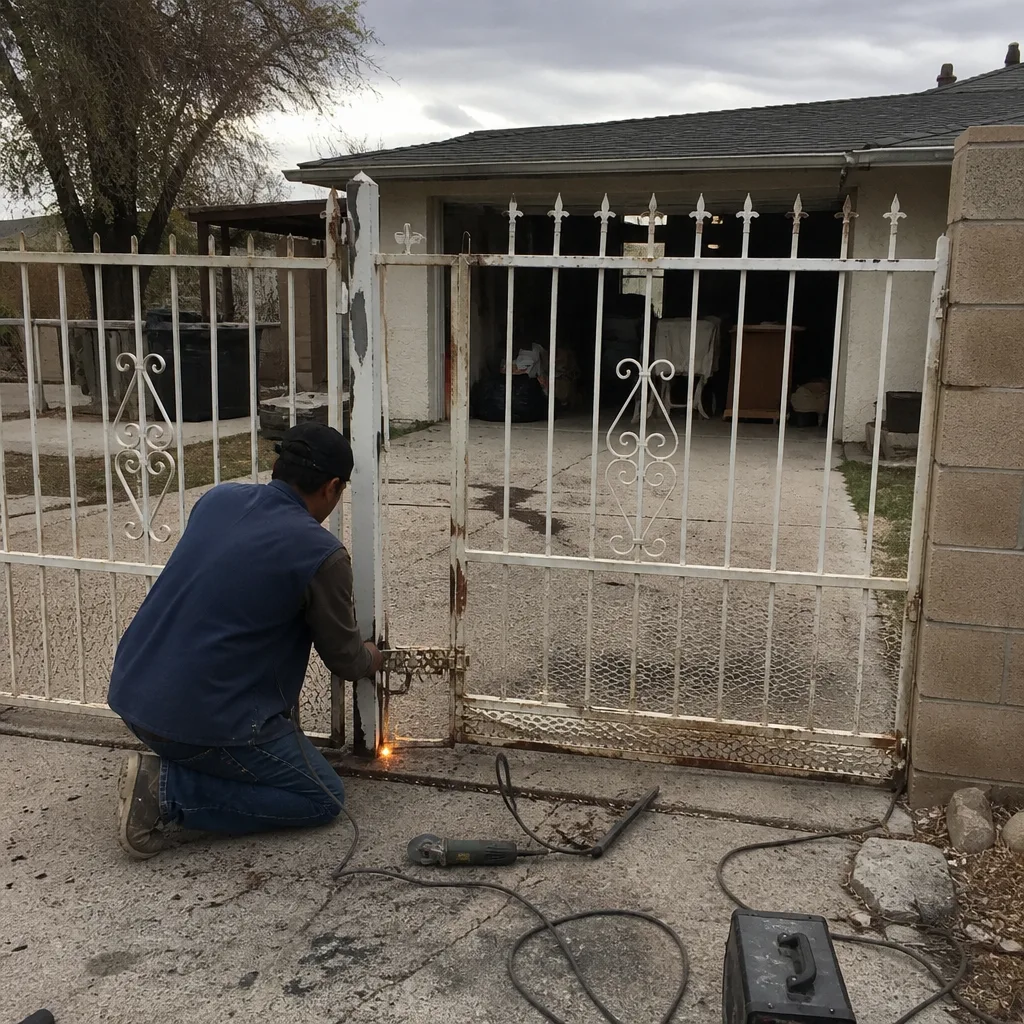 Before
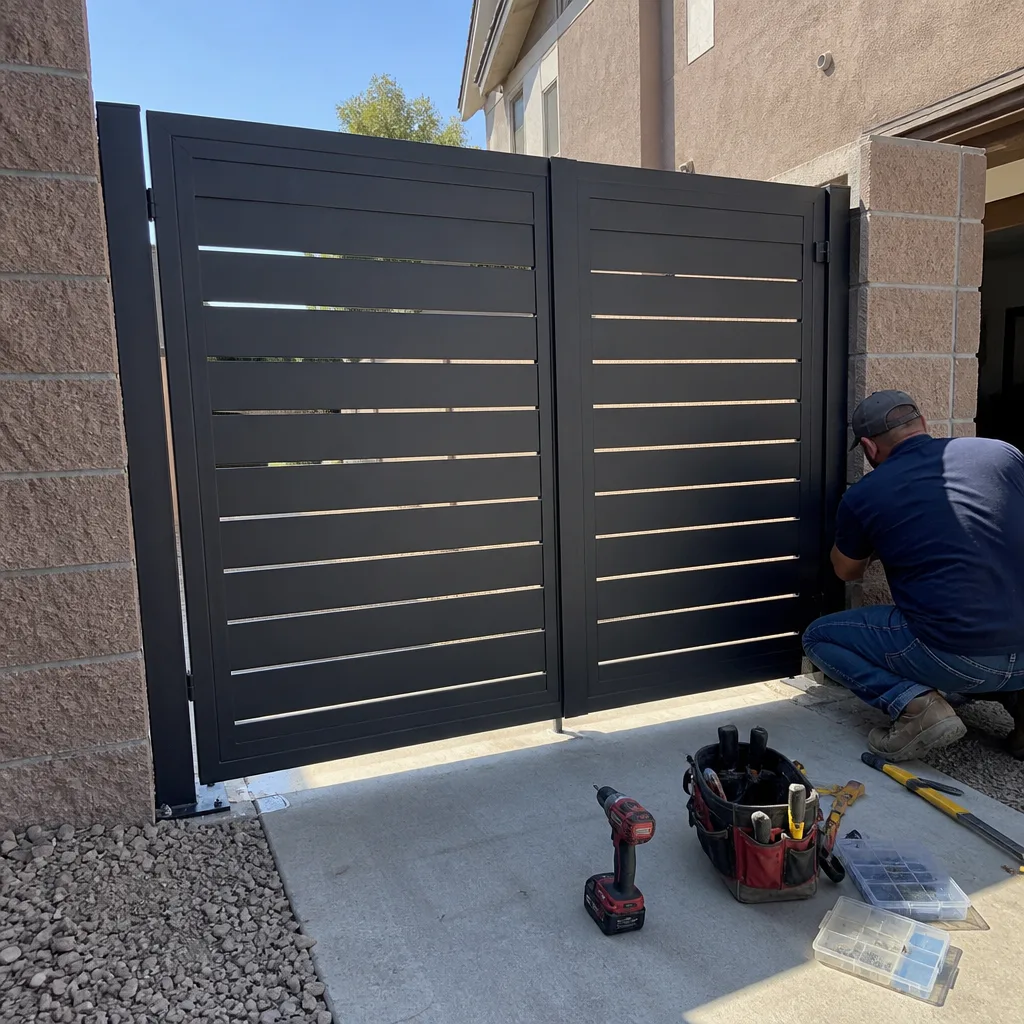 After
After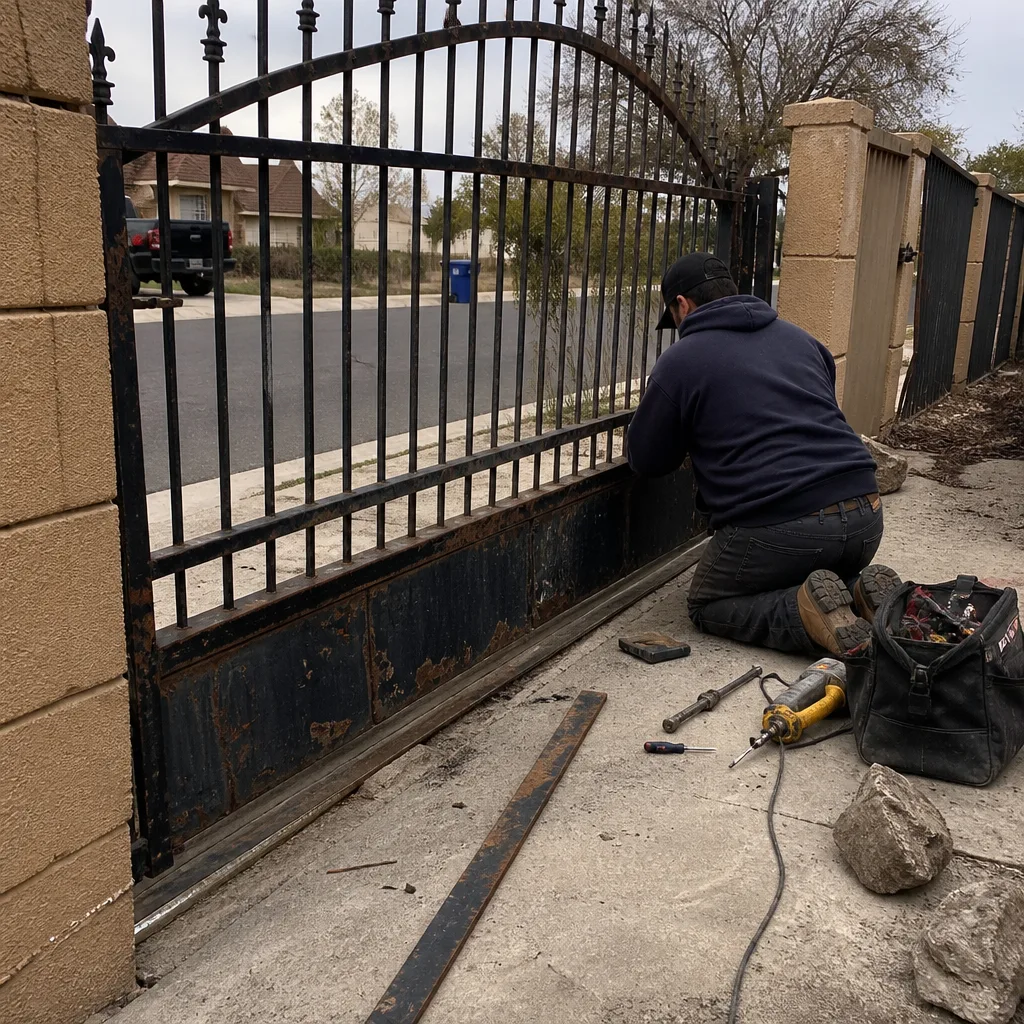 Before
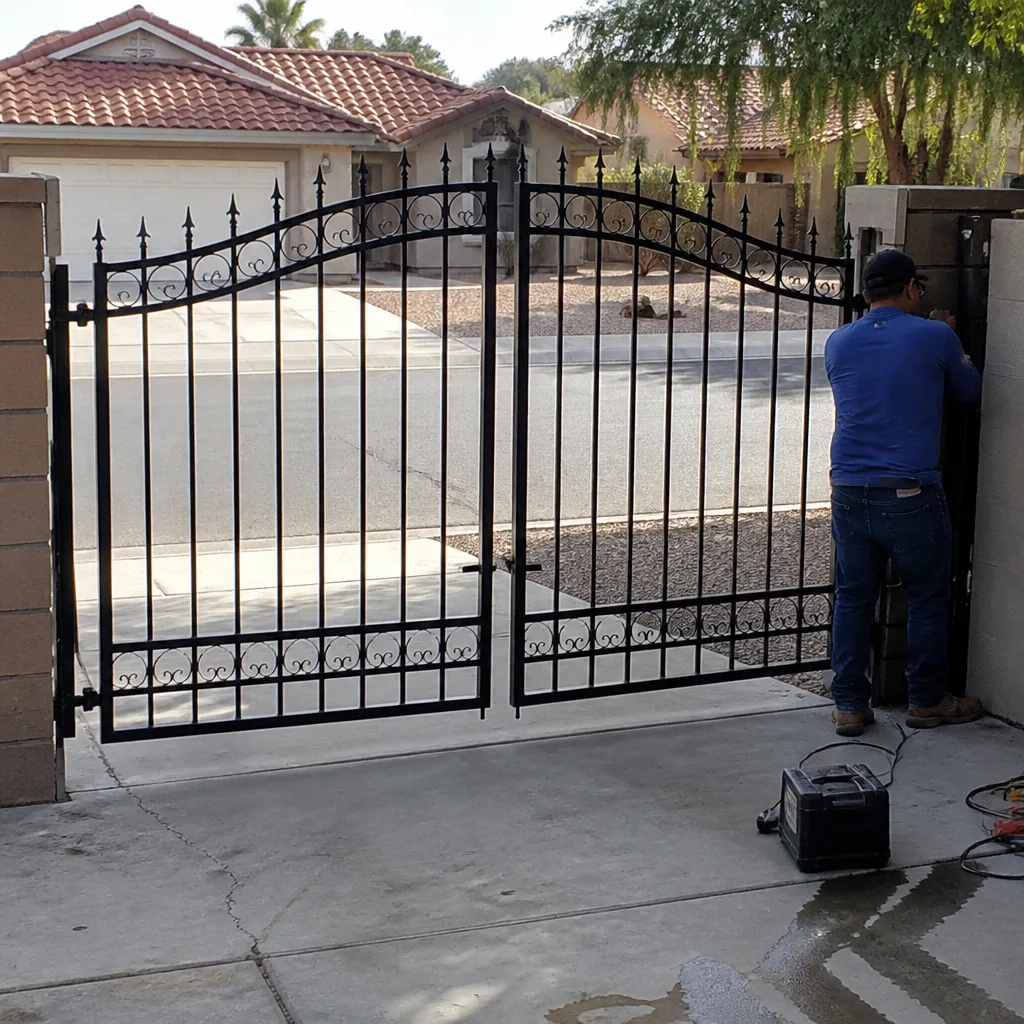 After
After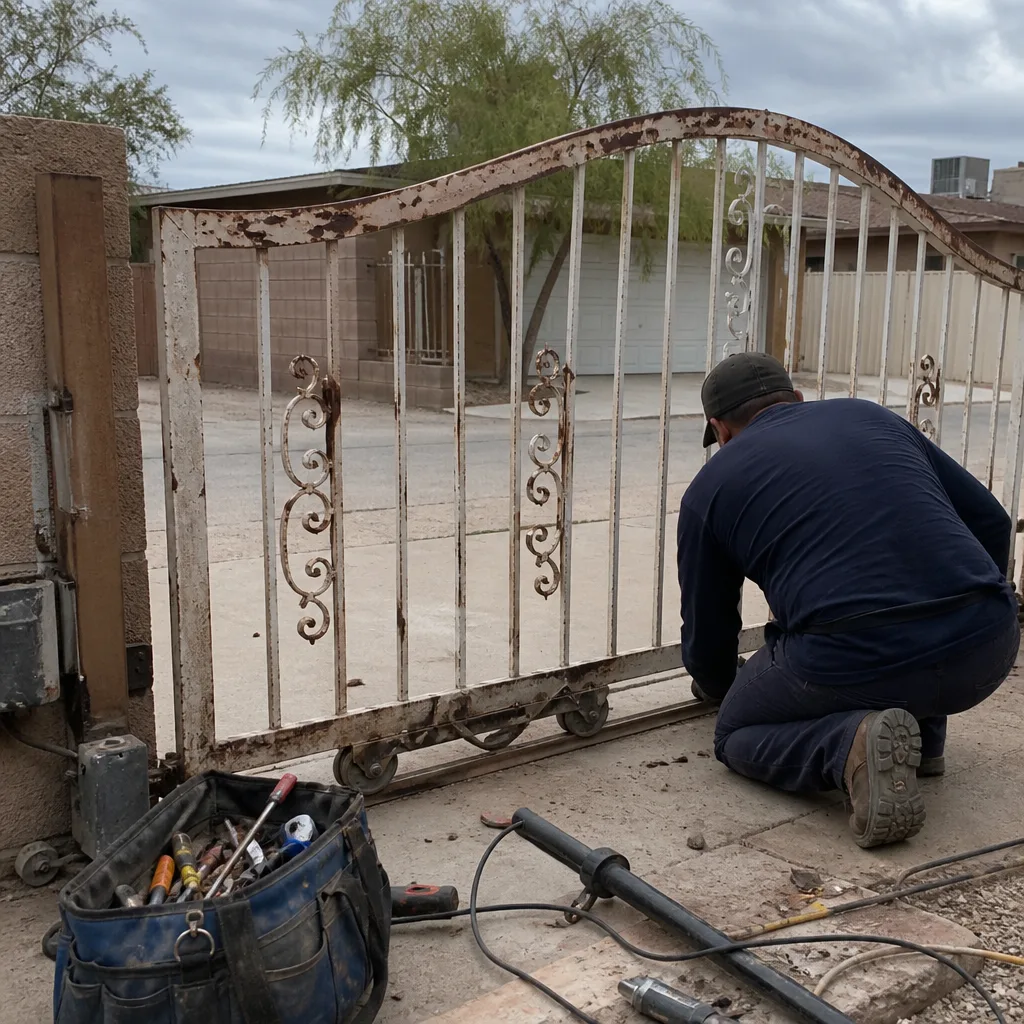 Before
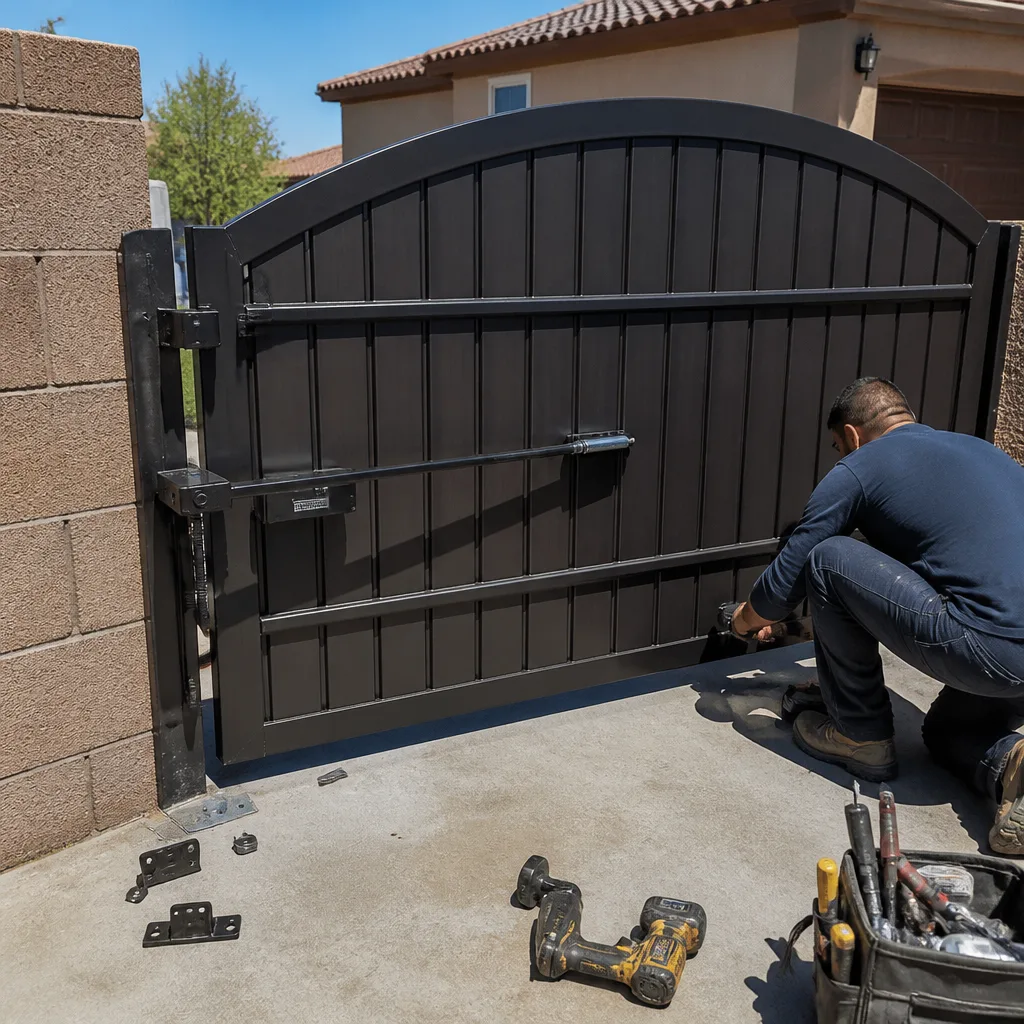 After
AfterWhen to Call a Professional
Call a gate technician the day you notice a hesitation that wasn’t there before, a new noise with a regular rhythm, or a gate that stops working in the afternoon heat. These are not cosmetic issues and they do not self-correct. Also call if your gate has been hit by a vehicle, even a light bump. A gate that took a trailer hitch to the bottom rail can look fine and be carrying a hairline crack that opens fully in the next windstorm. If you’re in Las Vegas and any sign in this guide sounds familiar, Portcullis Gate Repair Las Vegas home service offers free estimates across the valley. Call (725) 777-5391 and a live person answers, 24 hours a day.
Frequently Asked Questions
Most residential gate repairs in Las Vegas run between $120 and $2,200 depending on what failed. Minor electrical fixes like capacitors and photocells are at the low end, while full operator swaps and post resets push toward the top. Always get the price in writing before a single bolt is turned.
In most cases, yes. Common failures like capacitor swaps, photocell replacements, and wheel changes are fast repairs if the parts are on the truck. For same-day service in Las Vegas, call Electric Gate Repair in Las Vegas at (725) 777-5391 with the symptoms described as precisely as you can.
Heat is the usual cause. A failing capacitor loses its ability to start the motor when temperatures climb, or an afternoon sun angle blinds a safety photocell and the system refuses to move. Tell your technician exactly what time the failure starts and you’ll get the right parts on the first trip.
A full gate installation typically includes the gate panel, posts and footings, the operator, safety devices like photocells and contact edges, and all wiring from the panel to the operator. We provide a written quote before any work begins, and installation pricing in Las Vegas starts around $2,500 for a basic residential swing gate. See Gate Installation in Las Vegas for details.
Yes. We run the low-voltage and line-voltage wiring from the panel to the operator, set the safety edges and photocells, and program the travel limits and remote receivers. Every electric gate repair and installation includes the full electrical scope in the written quote.
It won’t cost you a dime. Every Portcullis repair carries a written 365-day guarantee under the 365-Day Done Right Promise. If the same failure returns within a year, we come back and correct it at no charge. The guarantee is stamped on every invoice.
The Bottom Line
Your gate tells you what’s wrong long before it actually fails. The hesitation, the slower travel, the rhythmic thump, the rust staining at a weld, the afternoon shutdown after months of fine morning operation, all of them are readable signs if you know what to look for. In Las Vegas, heat and dust compress the timeline, so a warning that would sit stable in another climate becomes a full failure here in a matter of weeks. The hand test separates motor problems from mechanical drag. The sound test tells you when a slide wheel has a month left. And when a professional is needed, the right expectation is simple: a real arrival window, a written price before work starts, and a written guarantee after. See our How to Hire a Gate Repair Contractor in Las Vegas: A Step-by-Step Guide for what to ask before you book. Call (725) 777-5391 for a free estimate. We answer the phone.
Written by Dean Prescott, Owner at Portcullis Gate Repair Las Vegas, serving Las Vegas since 2008. Explore more guides & resources on our blog.