
Last updated October 16, 2026
 Wrought iron
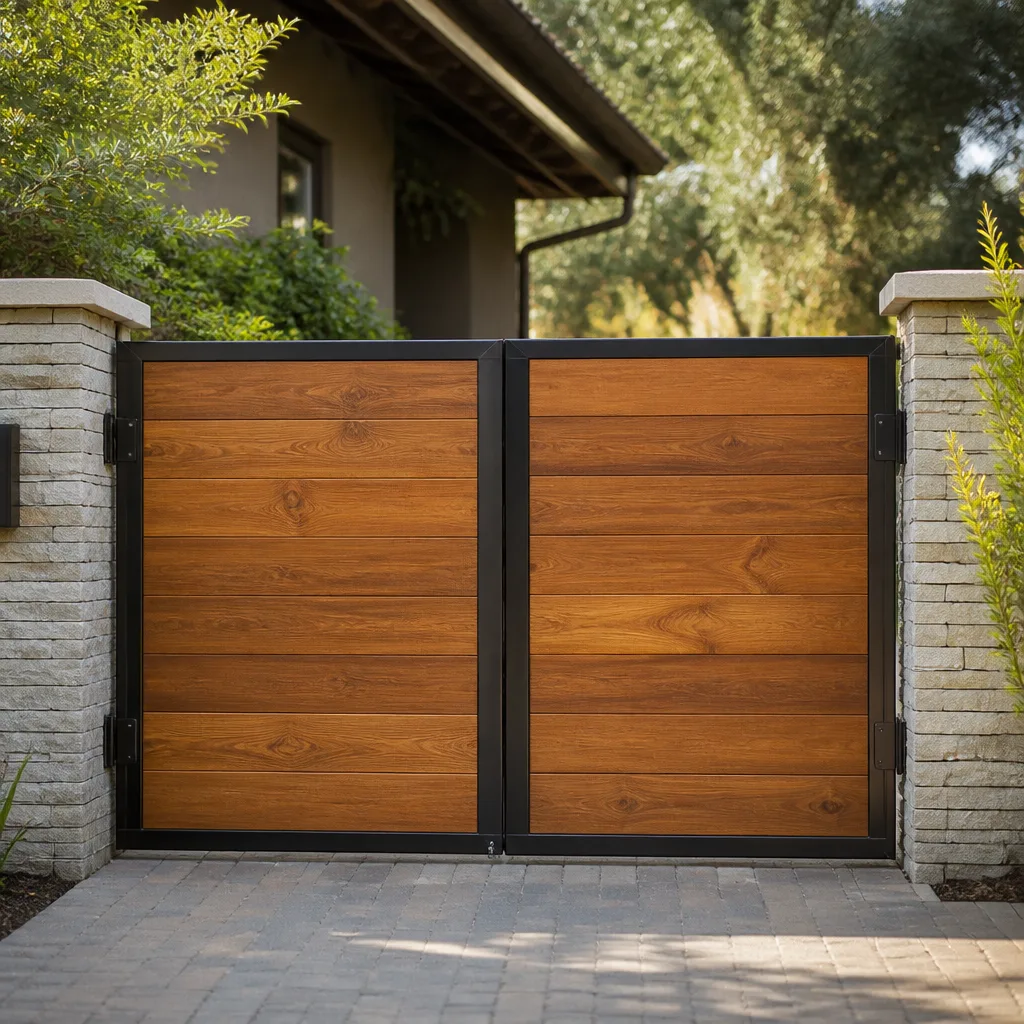 Wood & steel frame
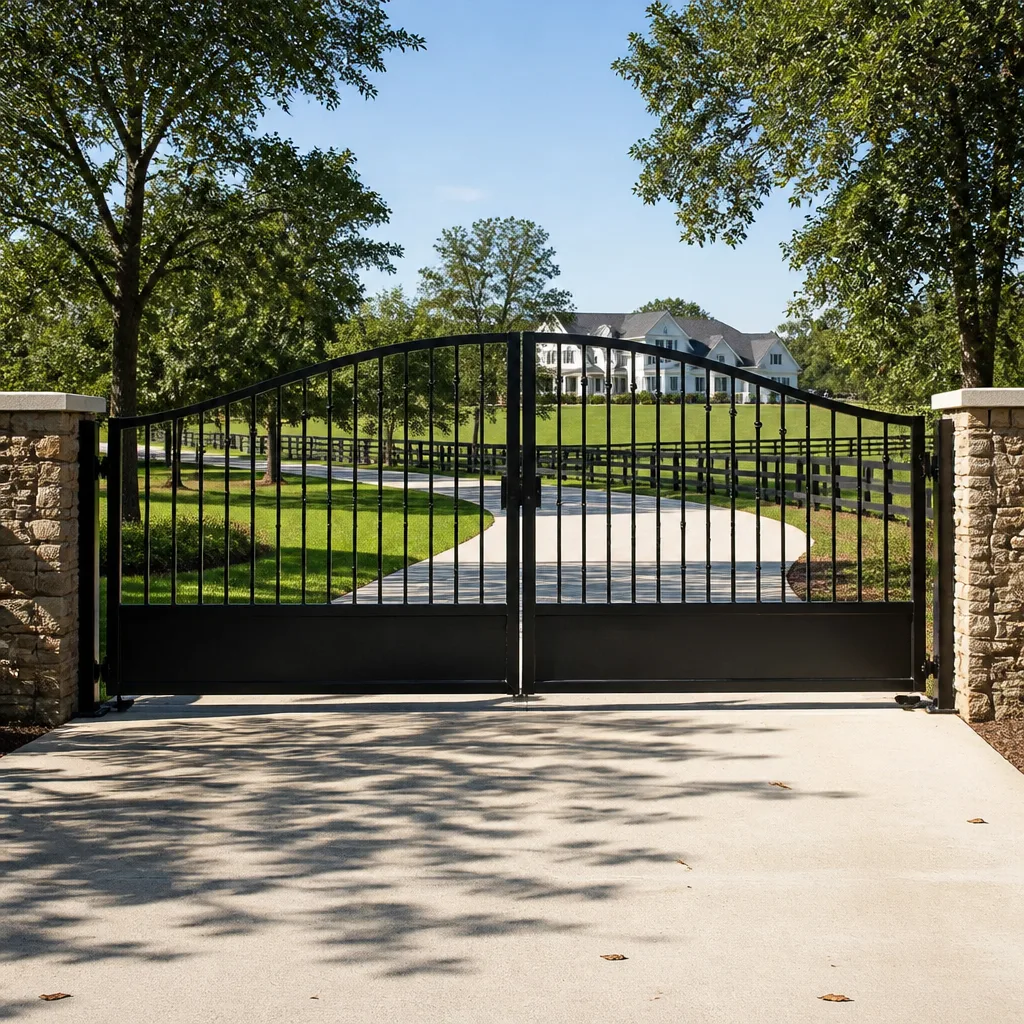 Farm & ranch
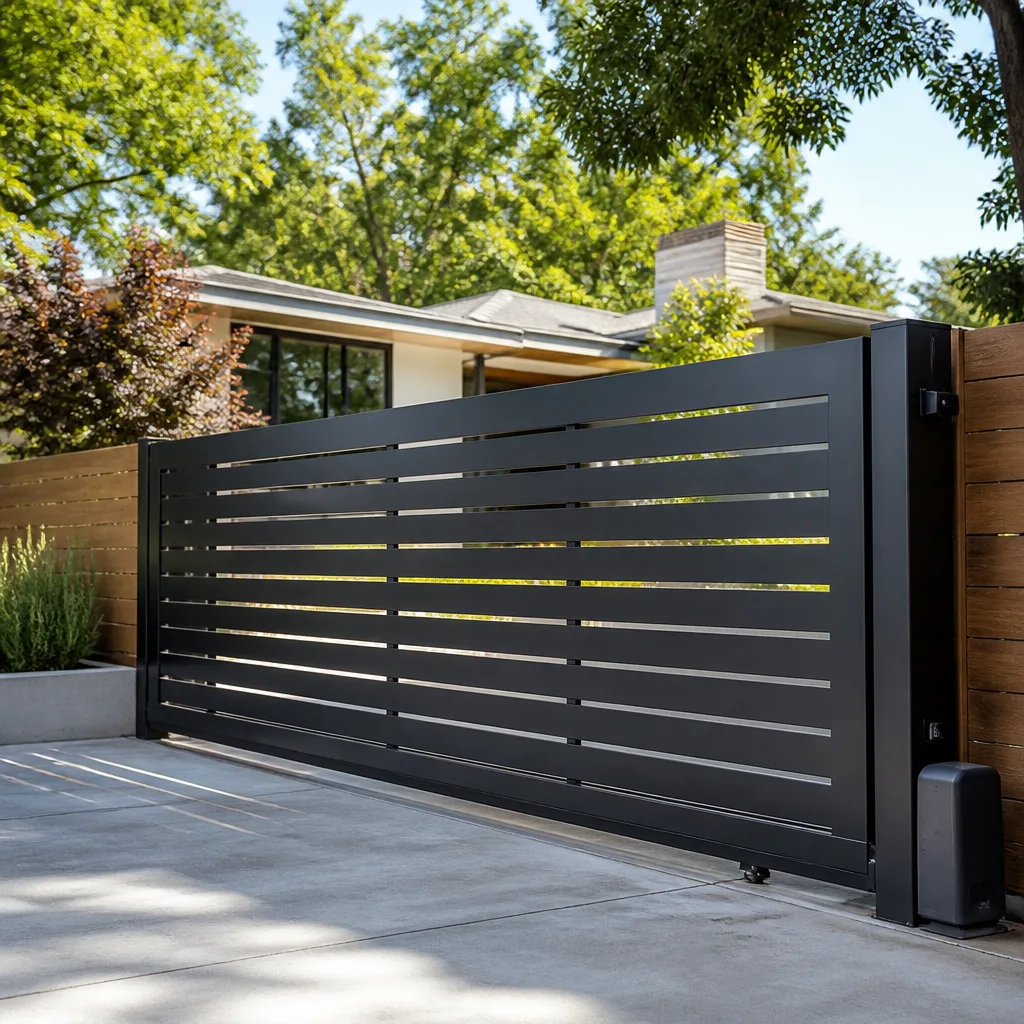 Sliding driveway gates
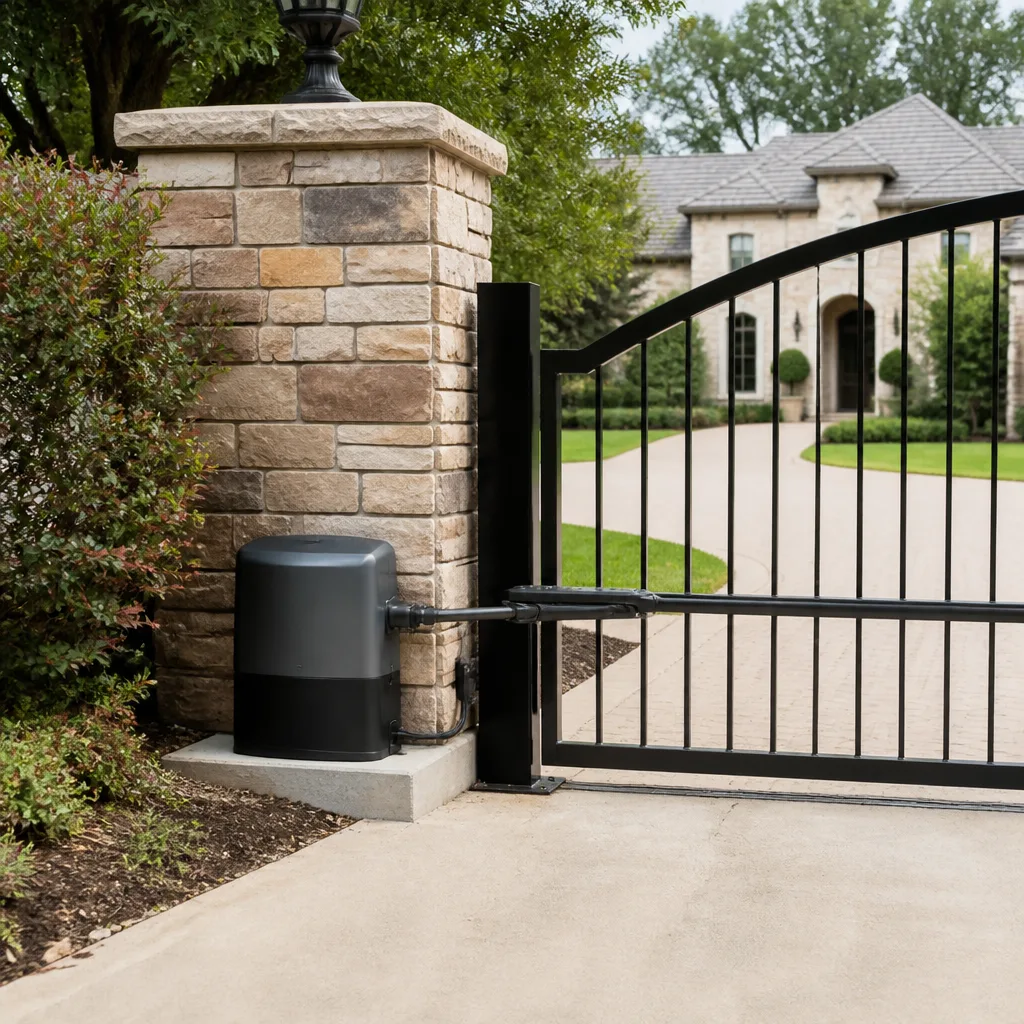 LiftMaster operators
Free on-site gate assessment - hinges, posts, and your LiftMaster or Nice gate operator checked before anything is quoted
The assessment is free and the quote is the invoice.
Get your free estimateSeasonal Gate Repair Care for Las Vegas: Year-Round Homeowner’s Guide
Between June and September, a Las Vegas gate absorbs three distinct forms of stress in sequence: sustained 110°F+ heat that warps aluminum and bakes lubricant dry, sudden monsoon downpours that flood track channels and rust exposed fasteners overnight, and haboob-driven dust that packs into every moving joint until the motor strains against its own housing. Most homeowners don’t realize their gate is failing until it won’t open. This guide walks through exactly what to check before, during, and after each Las Vegas season, what each preventive task costs, and what the neglect bill looks like when those same items get skipped for a year. For professional help, see our Gate Repair services.
Styles & brands we work with
Quick Answer
Seasonal gate care in Las Vegas means four focused checkups per year: a pre-summer heat and dust prep in April or May, a monsoon-season track and fastener protocol from July through September, a post-dust-storm inspection of photo-eyes and control boards, and a winter fluid and hinge check from November through January. Homeowners who follow these steps typically spend $120 – $260 per year on preventive upkeep, while the gate owners we see after a year of neglect average $380 – $700 for the repairs that follow.
Table of Contents
- Pre-Summer Prep: April Through May
- Heat Season Survival: June Through August
- Monsoon Protocol: July Through September
- Post-Monsoon Assessment: What to Check After Every Dust Storm
- Winter Prep: November Through January
- Preventive Care vs. Neglect: A Cost-Per-Season Reality Check
- Common Mistakes to Avoid
- When to Call a Professional
- Frequently Asked Questions
- The Bottom Line
Pre-Summer Prep: April Through May
By late April, daytime highs in Las Vegas routinely crack 90°F, and the thermal expansion that follows is what kills most gate hardware before the calendar even says summer. Metal gates in neighborhoods like Summerlin, Green Valley, and Centennial Hills sit in direct sun for 10 to 12 hours a day. Aluminum expands. Fasteners loosen. Welded seams flex. The prep window between mid-April and late May is the single most productive stretch of gate maintenance a Las Vegas homeowner gets all year.
Task 1: Lubricate Every Moving Joint, But Use the Right Product
The actuator, the motorized arm that physically pushes a swing gate open, relies on clean pivot points to swing without resistance. The same goes for the hinge bearings on the gate itself, the chain on a slide gate, and the rollers that ride inside the track. In Las Vegas, regular spray lubricant evaporates in about six weeks. We recommend a dry-film PTFE lubricant instead. It leaves a protective coating that won’t attract dust, which matters in a city where a single wind event can dump a quarter inch of silt onto your driveway in an afternoon. Avoid heavy grease on chains and rollers; it bakes into a gummy paste under direct sun and makes the motor work harder, which shortens the operator’s lifespan. A $12 can of dry lubricant applied to all moving joints in May prevents most of the $200 – $400 motor strain repairs we see in July.
Task 2: Check the Capacitor Before the Heat Arrives
The capacitor on your gate operator is a cylinder about the size of a small Red Bull can. It stores the electrical charge needed to start the motor. Capacitors degrade in heat, and a Las Vegas summer pushes exposed operator housings past 130°F on the worst afternoons. If your gate motor hums but doesn’t move in May, the capacitor is already failing. Replacing it now costs $45 – $90 in parts and labor. Replacing it after it blows out in August means a dead gate, a service call, and commonly $180 – $260 total because the technician has to diagnose and swap the part while the homeowner stands in the driveway at 108°F. Portcullis Gate Repair technicians carry capacitors for LiftMaster, FAAC, and Linear operators on the truck, which means one visit instead of two for most Las Vegas homeowners.
Task 3: Clear and Level the Track Before Dust Storm Season
Slide gates roll on a ground-level track, a steel channel bolted to the concrete across the driveway opening. Between May and September, this track fills with sand, gravel, and landscaping debris even without a major storm. Walk the track with a flathead screwdriver or putty knife and scrape out anything that isn’t steel. Check the bolts with a wrench; they loosen every season from the vibration of the gate rolling over them. A track that’s packed with debris forces the gate to ride high, which bends the bottom rail and chews up the drive gear. If you hear grinding, stop using the gate and call a technician. Grinding means the gear is eating itself, and every additional cycle adds to the eventual bill. Full gate track replacement in Las Vegas runs $350 – $600 for most residential openings, but clearing a track in May costs nothing but 20 minutes.
Task 4: Coat Wood and Painted Metal Before UV Season
Las Vegas gets more than 3,800 hours of sunshine a year. UV radiation strips the lignin out of wood gates, which is the binding agent that holds wood fibers together. A wood gate in Las Vegas without a UV-protective seal coat typically loses structural strength and develops cracks at the joints within two to three years of installation. Painted metal gates fade and chalk, and once the paint fails, the bare steel underneath rusts during monsoon season. April and May are the months for applying a UV-blocking spar urethane to wood gates or a quality automotive-grade clear coat to painted metal. A $40 – $60 sealant job done annually costs far less than the $800 – $1,200 a full wood gate rebuild runs in the Las Vegas market when rot and splitting get deep enough to compromise the frame.
Heat Season Survival: June Through August
Las Vegas summers don’t just stress the gate. They stress every component inside the operator housing, and the failures follow a predictable pattern every year. The first heat wave pushes marginal capacitors over the edge. The second wave kills control boards. The third wave, combined with ozone and dust, degrades the wire insulation inside the operator arm until a short appears. Homeowners can’t prevent all of this, but a few habits reduce the odds of a mid-July gate failure.
Don’t Run the Gate More Than Necessary During Peak Heat
Every cycle generates heat inside the motor housing. On a 112°F afternoon, the housing is already at 125°F from ambient air temperature plus solar gain. Run the gate 20 times in a day, and the internal temperature climbs higher with each cycle. Most residential gate operators are engineered for continuous duty in normal climates, but sustained Las Vegas summer heat pushes them into thermal overload repeatedly. The overload protector trips, the gate stops, and the homeowner has a security problem on their hands. If the gate is for a single home, consolidate trips. Don’t run it for a guest, then a delivery, then a gardener, then a pool cleaner, all within an hour. If the gate serves multiple homes in an HOA or gated community in Summerlin or Henderson, the operator needs a proper thermal duty-cycle assessment by a technician who understands the Las Vegas climate. More on that from our Gate Repair in Las Vegas page.
Watch the Photo-Eyes for Heat Haze Distortion
Photo-eyes, the small paired infrared sensors mounted on either side of the gate opening, are the primary safety device that stops the gate from closing on a car or person. Las Vegas heat causes two problems. First, the plastic housings warp slightly, which throws off the alignment. Second, heat haze shimmering off asphalt creates false infrared interference that confuses the receiver. If the gate reverses for no reason or refuses to close during the hottest hours, the photo-eyes are the first place to look. Cleaning the lenses with a soft cloth and checking the alignment screw costs nothing. If the housing has warped beyond adjustment, replacement photo-eyes run $60 – $120 installed for most brands.
What Quits First: The Real-World Failure Sequence
In our experience at Portcullis Gate Repair, across hundreds of Las Vegas gate service calls each summer, the failure sequence is remarkably consistent:
- Capacitor – first major heat wave of June. Gate hums but doesn’t move. $45 – $90 to fix in May, $180 – $260 to fix as an emergency in July.
- Photo-eye misalignment – typically late June through early July, after several cycles of thermal expansion and contraction. Gate reverses unexpectedly or won’t close. $40 – $80 to realign if caught early, $100 – $150 if the housing has warped.
- Track binding and gear wear – mid to late July, after dust and heat combine to pack the track. Grinding noise, gate shaking, motor straining. $200 – $400 for gear replacement, more if the bottom rail has bent.
- Control board failure – August, when sustained heat plus electrical load finally cooks the circuit board. Dead gate, no response from remote or keypad. $250 – $500 for board replacement depending on brand and model.
- Wire insulation breakdown – late August into September, when months of 130°F-plus inside the arm finally cracks the insulation. Intermittent operation, shorts, phantom openings. $150 – $350 to rewire the arm and replace connectors.
Homeowners who knock out the capacitor check, photo-eye cleaning, and track clearing in May typically skip items one through three on this list entirely. The gate still gets hot, but the components are in condition to handle it.
Monsoon Protocol: July Through September
Monsoon season in Las Vegas runs from early July through late September, though the worst storms usually cluster in August. Humidity jumps from single digits to 60% or higher in minutes. Rain falls in sheets. Then the wind shifts, and a haboob blows a wall of dust and sand across the valley that turns the sky brown and coats every horizontal surface in a fine layer of grit. For a gate, a monsoon is a triple threat: moisture, grit, and sudden temperature swings that stress metal joints and electrical connections.
Before the Storm: A 15-Minute Checklist
When the National Weather Service issues a monsoon or flash flood watch for the Las Vegas valley, spend 15 minutes outside. It is the cheapest insurance a gate owner can buy.
- Clear the track. Use a broom or leaf blower to clear sand and debris from the gate track. If the track is already packed, scrape it with a flathead screwdriver before the rain turns the silt into concrete.
- Tighten the dog-leg bolts. The dog-leg bolts connect the gate to the operator arm on swing gates. Rain plus wind-driven vibration loosens them. A loose dog-leg bolt is the most common cause of a swing gate that starts fine and then binds halfway through its arc after a storm.
- Check the weather seal on the operator housing. Most quality openers from LiftMaster, FAAC, and Elite have rubber gaskets around the housing cover. If the gasket is cracked or missing, rain gets in. A $15 tube of silicone gasket sealant applied in May or July prevents $300 board replacements in August.
- Stow or secure anything loose near the gate. Monsoon winds regularly hit 60 mph in Summerlin and Anthem. A patio chair blown into the gate track bends the bottom rail. A pool float blown into the photo-eye path causes the gate to cycle repeatedly until something fails.
After the Storm: Clearing Haboob Debris Without Bending the Rail
This is the step where we see the most self-inflicted damage. A homeowner comes out after a dust storm, sees the gate track packed with sand, and starts digging at it with a shovel or, worse, kicking at the debris. The bottom rail of a slide gate is engineered to support the gate’s weight in a straight line. It is not engineered to withstand lateral force. A hard kick to a packed track can bend the bottom rail, which then scrapes against the track on every cycle and eventually tears the drive gear apart.
The correct approach is slower. Use a garden hose on a gentle spray setting to wash the silt out of the track channel, working from the closed end toward the open end so the water carries the debris out. If the silt has already dried into a hard crust, soak it for 10 minutes first, then use a wooden dowel or a plastic putty knife to break it up. Never use metal on metal. If the gate is already binding when you try to move it, stop and call a technician. Running a gate against a packed or bent track is how a $50 debris-clearing job becomes a $450 track-and-gear replacement. For more detail on what goes wrong with slide gates specifically, see our Electric Gate Repair in Las Vegas page.
Which Fasteners to Replace Annually
Rain in Las Vegas is rare but intense, and when it comes, it finds every exposed steel fastener on a gate and starts the rust process immediately. The humidity spike during and after a storm is worse than the rain itself; 60% humidity at 90°F is a corrosive environment for unprotected steel. We recommend replacing the following fasteners once per year as a matter of course, ideally in September after monsoon season ends:
- Track anchor bolts – exposed to the ground, constantly wet, constantly rusting. Grade-5 zinc-plated carriage bolts cost about $1 each. Replace all of them annually. Cost: $10 – $20 in parts.
- Hinge pins and bushings – the pivot points of a swing gate. Rust here causes squealing, binding, and eventually the gate sagging so badly the actuator can’t push it. A full hinge rebuild kit for a standard residential swing gate runs $40 – $80.
- Dog-leg bolts and the connecting rod – the connection point between the operator arm and the gate. When these rust through, the gate drops off the arm entirely. Replacement hardware costs $15 – $30.
- Wheel and roller bearings on slide gates – rusted bearings howl and then seize. Seized rollers drag, which overloads the motor. Replacement rollers run $25 – $50 each depending on gate weight.
Total annual fastener replacement cost: roughly $90 – $180 in parts for a typical Las Vegas residential gate. Compare that to a single failed hinge that drops a gate off its actuator, a repair we bill at $300 – $500 on a normal service call, and the math is not complicated.
Post-Monsoon Assessment: What to Check After Every Major Dust Storm
Every major dust event in Las Vegas leaves a residue inside the gate system that doesn’t show up in a casual visual check. The three items below are the post-storm inspections that catch problems while they’re still cheap to fix. A homeowner can do all three in under 20 minutes with a flashlight and a screwdriver.
Check 1: Photo-Eye Alignment
Dust storms shift the photo-eye housings, especially if they were already loose from thermal expansion earlier in the summer. A misaligned photo-eye causes the gate to reverse mid-close, refuse to close entirely, or stop halfway and sit there. Walk to each photo-eye, look at the receiver, and confirm the small indicator light is steady, not blinking. Blinking means misalignment or obstruction. Clean both lenses with a soft, dry cloth, loosen the adjustment screw, realign until the light goes steady, and retighten. If the light stays blinking or the housing is cracked, replace the photo-eye. This is a $60 – $120 fix versus a $250+ service call for a gate that won’t close at 9 PM because the sensor has failed entirely.
Check 2: Ground-Level Track Distortion
Silt from a haboob packs into the track channel, and when the gate rolls over it repeatedly, the downward force plus the packed debris bends the track guides outward. Run your hand along the inside of the track channel (with the gate unplugged or the motor disengaged, not while it’s operating). Feel for bulges, pinches, or spots where the channel has spread wider than the rollers. A distorted track shows up under the gate as visible scraping marks on the bottom rail. If the track is bent but the gate still moves, you have a narrow window to fix it inexpensively. A track straightening and re-anchoring job runs $150 – $300. If the gate continues running on a bent track, the drive gear fails, and the repair bill lands at $400 – $600.
Check 3: Control Board Moisture Intrusion
This one surprises homeowners because the control board lives inside a sealed operator housing. But the housing is not airtight, and a monsoon storm combines two factors: the pressure drop before a storm pulls humid air into the housing, and then the rapid cool-down after the storm causes condensation to form on the circuit board. Open the housing cover (power off, first) and look for the three signs of moisture damage:
- A white, chalky residue on the board or the connectors – that’s mineral deposits left by evaporated moisture.
- Corrosion on the wire terminals – green or brown crust on the screw terminals where the low-voltage wires connect.
- A musty or burned smell inside the housing – signs that moisture has already caused arcing.
If the board shows any of these signs, it has not necessarily failed yet. Cleaning the terminals with contact cleaner and resealing the housing gasket costs $50 – $90 as a service call and often adds years to the board’s life. Left alone, moisture corrosion migrates through the traces, and the board fails in the middle of the next heat wave. A replacement control board for a LiftMaster, FAAC, or BFT operator runs $250 – $500, and that’s before labor.
Winter Prep: November Through January
Las Vegas winter is mild by most standards, but it’s the temperature swing that matters, not the absolute low. A typical January day in the Las Vegas valley runs from 40°F overnight to 65°F or higher by mid-afternoon. That’s a 25-degree daily spread, and over the course of a month, the expansion and contraction cycle repeats 30 times. Metal fatigues. Lubricant thickens. Electrical connections loosen. The winter prep window, from November through early January, is when a few low-cost tasks prevent the failures that show up in February.
Hydraulic Swing Gate Operators: What the Cold Does
If your swing gate runs on a hydraulic operator, particularly units from FAAC, BFT, or Viking, the winter temperature swings affect the hydraulic fluid directly. Hydraulic systems rely on a specific fluid viscosity to move the actuator arm at the correct speed. When the temperature drops overnight, the fluid thickens. The gate slows down. Then the sun comes up, the fluid warms, and the gate speeds back up. A gate that runs noticeably slower at 7 AM than at 2 PM is not broken, but it is telling you the fluid is aging and the viscosity is drifting out of spec.
The fix is an annual hydraulic fluid change, ideally in November before the coldest nights arrive. The fluid specified for your operator model matters; a hydraulic operator designed for FAAC specs uses a different fluid than a BFT unit. Use the wrong viscosity, and the gate runs jerky or the seals blow out under pressure. A hydraulic fluid flush and refill on a residential swing gate operator in Las Vegas typically runs $150 – $250, including the fluid, the labor, and a check of the seals and hoses. Skip it for two or three seasons, and the cold-thickened fluid puts enough stress on the internal seals to crack them, at which point the repair bill shifts to a full actuator rebuild at $600 – $1,000.
Battery Backup Systems: The Overlooked Winter Failure Point
Every gate operator installed in Las Vegas should have a battery backup for the simple reason that the grid occasionally fails during summer storms. But the battery itself ages faster in heat, and by winter, a battery that barely made it through August is past its useful life. Test it in November. Unplug the operator from wall power (or flip the dedicated circuit breaker) and run the gate through a full open-close cycle on battery power alone. If the gate moves slowly, the battery is weak. If the gate doesn’t move at all, the battery is dead.
A replacement 12V backup battery for a LiftMaster, Linear, or Elite operator runs $35 – $80, and installation takes 15 minutes. We recommend replacing the backup battery every two years regardless, because Las Vegas heat degrades sealed lead-acid batteries faster than the manufacturer’s three-year rating assumes. A dead backup battery is the reason a whole gated community in Henderson finds itself manually pushing a gate open after a winter power outage, and that’s a problem no one anticipates until it happens.
Mighty Mule and Ghost Controls DIY Operators: Winter-Specific Notes
A significant number of Las Vegas homeowners run DIY-friendly gate operators from Mighty Mule or Ghost Controls, and these units account for a disproportionate share of our winter service calls. The arm-style actuators on both brands are built to a residential price point, which means the seals and mounting brackets are not as robust as commercial-grade units. The cold-weather failures we see every winter in the Las Vegas valley:
- Mounting bracket bolts loosening in the thermal cycle – the arm vibrates loose from the gate post, then binds, then the plastic gear strips. Tighten all bracket bolts in November.
- Plastic actuator housing cracking – the overnight chill makes the plastic brittle, and any existing stress crack from summer heat opens wider. Inspect the arm for hairline cracks around the mounting plate and the pivot points in December.
- Remote range dropping in cold weather – the receiver boards in budget operators don’t have the temperature compensation of commercial units. The range shortens when the board is cold. If the remote only works from 15 feet away in January but 40 feet away in April, the board is not defective; it’s just cold. If the range is frustratingly short, a receiver upgrade to a temperature-compensated board costs $120 – $200 installed.
Preventive Care vs. Neglect: A Cost-Per-Season Reality Check
Homeowners in Las Vegas tend to underestimate what a year of skipped gate maintenance actually costs. The individual items feel small: a can of lubricant, a handful of bolts, a capacitor that hasn’t failed yet. But the neglect bill compounds, and it lands squarely in the July-through-September window when the gate is under maximum stress and the homeowner most needs it to work. Here is the honest math, based on what we see across Las Vegas neighborhoods from Summerlin to Henderson to Centennial Hills.
| Season | Preventive Action | Preventive Cost | Neglect Repair | Neglect Cost |
|---|---|---|---|---|
| Spring (Apr – May) | Lubricate joints, check capacitor, clear track, seal wood/metal | $60 – $120 | Capacitor failure, seized track gear | $180 – $400 |
| Summer (Jun – Aug) | Thermal inspection, photo-eye check, limit cycle count | $0 – $80 | Control board failure, wire insulation breakdown | $250 – $500 |
| Monsoon (Jul – Sep) | Fastener replacement, track clearing, gasket seal | $90 – $180 | Rusted hinge collapse, bent bottom rail, board corrosion | $300 – $700 |
| Winter (Nov – Jan) | Hydraulic fluid change, battery test, bracket tightening | $150 – $250 | Actuator seal blowout, dead backup battery, stripped gear | $400 – $1,000 |
The annual preventive total runs roughly $300 – $630 for a Las Vegas gate, and the high end assumes a hydraulic fluid change that some electric-only systems don’t require. The neglect total for the same 12 months runs $1,130 – $2,600, and that assumes each failure happens once. In reality, a homeowner who ignores the gate through June and July often has two or three failures stacked on top of each other by the time we arrive, because each unfixed problem accelerates the next one.
This is not a scare tactic. It is the pattern we’ve seen since 2008, when Portcullis Gate Repair first started serving Las Vegas as a Kingswell company. Gates that get seasonal attention fail rarely. Gates that get none fail at the worst possible moment, and the repair bill lands at the worst possible time.
Common Mistakes to Avoid
- Using WD-40 on gate chains and rollers. WD-40 is a water displacer, not a lubricant. In Las Vegas, it evaporates in days and leaves a sticky residue that attracts dust. The chain ends up dirtier than before within a week. Use a dry-film PTFE lubricant instead.
- Ignoring a slow-moving gate in cold weather. A gate that lags in January and perks up in March is telling you the hydraulic fluid is aging. Wait too long, and the thickened fluid blows the seals. The fluid flush costs less than a third of an actuator rebuild.
- Kicking or hammering debris out of a packed track. The bottom rail is not built for lateral force. Bend it, and the gate scrapes on every cycle until the drive gear strips. Use water and a non-metal scraper, or call a technician.
- Running the gate repeatedly during peak heat. Thermal overload protection trips for a reason. Consolidate trips during the hottest afternoons, especially if the gate serves multiple homes on an HOA loop.
- Putting off the annual fastener replacement. Rusted hinge pins and track bolts in Las Vegas are a when, not an if. The $10 – $20 in replacement bolts costs less than the emergency call when a rusted pin snaps and the gate drops.
- Assuming the operator housing is waterproof. It is not. The gaskets degrade, and monsoon humidity gets inside. Open the housing once per season and look at the board. White residue and green corrosion means water has already arrived.
- Skipping the battery backup test. A backup battery that has never been tested is a backup that does not exist. Test it in November, replace it every two years, and know the gate still works when the grid goes down.
When to Call a Professional
Some gate maintenance is genuinely do-it-yourself, and this guide is written for the homeowner who wants to handle the simple items. But there are lines that should not be crossed. If the gate is grinding, shaking, or slowing down noticeably, the problem is almost certainly mechanical and will get worse with every cycle. If you open the operator housing and see corrosion, charring, or melted wire insulation, stop and call a professional; live electrical components are not a DIY repair. If the gate has come off its track or dropped from its hinges, do not try to lift it back into place. Gates weigh hundreds of pounds, and the stored energy in a torsion spring can cause serious injury. Any repair involving the actuator arm, the control board, or heavy structural components belongs with a trained technician. Portcullis Gate Repair Las Vegas offers free estimates in Las Vegas and surrounding areas, and every job gets a written price before any work starts. Call (725) 777-5391 to schedule.
Frequently Asked Questions
A full year of preventive gate maintenance in Las Vegas, including lubrication, capacitor testing, fastener replacement, track clearing, and a winter fluid check, typically runs $300 – $630 depending on the type of operator and the gate’s age. Electric-only systems with battery backup sit at the lower end; hydraulic swing gates with a fluid flush sit at the higher end. For an exact quote on your specific gate and operator, call (725) 777-5391 for a free estimate.
Yes, in most cases. Portcullis Gate Repair keeps Las Vegas service trucks stocked with the most common replacement parts for LiftMaster, FAAC, BFT, Linear, and Elite operators, which means a capacitor swap, photo-eye realignment, or track clearing is usually a one-visit repair. For more involved jobs like control board replacement or hydraulic actuator rebuild, we schedule a specific arrival window and give the price in writing before work begins. Live-person phone coverage runs 24 hours a day at (725) 777-5391.
A full gate installation in Las Vegas includes the gate frame and panels built to your opening size, hinge or track hardware, the operator and control board, photo-eyes and safety edges, a keypad or intercom if specified, and the power run to the operator. Depending on the neighborhood and the gate type, the job may also require an HOA approval step and a concrete pad for the operator post. We give a written quote before any work starts and stand behind the installation with the 365-Day Done Right Promise. Learn more on our Gate Installation in Las Vegas page.
Yes. Portcullis Gate Repair handles the complete electrical scope for Las Vegas gate installations and repairs, from the panel breaker to the operator arm, including the low-voltage wiring for photo-eyes, safety edges, keypads, and intercoms. We also replace or upgrade safety edges on existing gates when the rubber edge strip wears out or the internal sensing tape fails, which is a common issue on gates that see heavy vehicle traffic.
Based on the service calls Portcullis Gate Repair runs in Las Vegas each year, the most common summer gate failure is a burned-out capacitor, followed closely by control board failure from sustained heat. Both are preventable with a spring inspection. The capacitor check takes 10 minutes and costs $45 – $90 to replace early, versus $180 – $260 for an emergency swap when the gate dies in July.
If the gate opens and closes smoothly and quietly, with no visible rust, no sagging, and no hesitation when commanded from the remote or keypad, you need seasonal maintenance only. If the gate hums but doesn’t move, grinds, shakes, reverses unexpectedly, or refuses to close, the problem is a mechanical or electrical fault that requires a professional diagnosis. The quickest way to know for sure is to call (725) 777-5391 and describe what you’re hearing and seeing; we’ll tell you over the phone whether it needs a technician or a can of lubricant.
The Bottom Line
Las Vegas doesn’t have four gentle seasons, and a gate maintenance calendar built for another climate will fail here every single year. The two punishing stretches, summer heat and monsoon humidity, are the ones that break gates, and the two transition stretches, spring and fall, are the ones that protect them. Spend $300 – $630 a year on the right preventive tasks at the right time, and your gate will likely run for a decade with only minor service. Skip it, and the repair bills stack into the thousands. The single most important habit: do the spring prep in April or May, every year, no exceptions. Everything else follows from that. For Las Vegas homeowners who want a written, guaranteed maintenance plan that fits their specific gate, Portcullis Gate Repair Las Vegas home is the place to start, or simply call (725) 777-5391 and we’ll come out, assess the gate, and hand you a written plan before any work is scheduled.
Written by Dean Prescott, Owner at Portcullis Gate Repair Las Vegas, serving Las Vegas since 2008.
See the difference
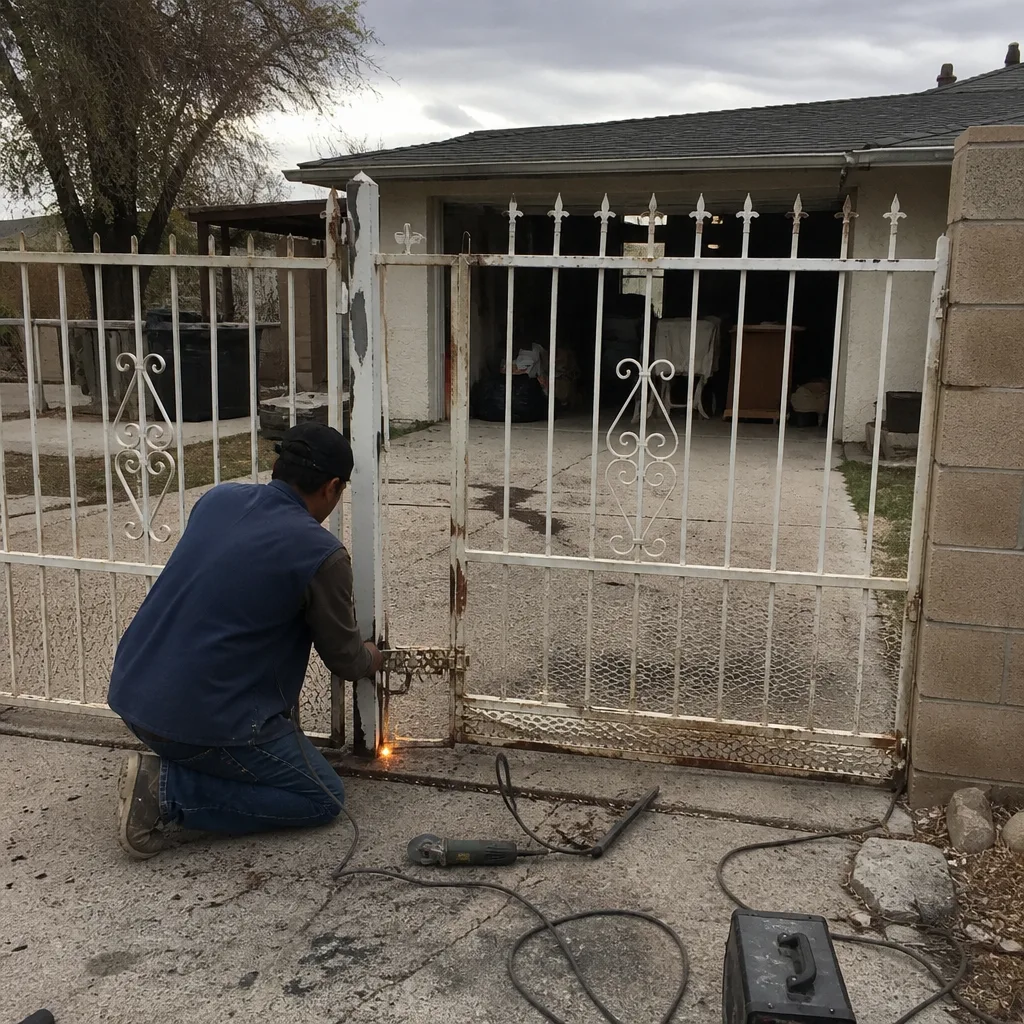 Before
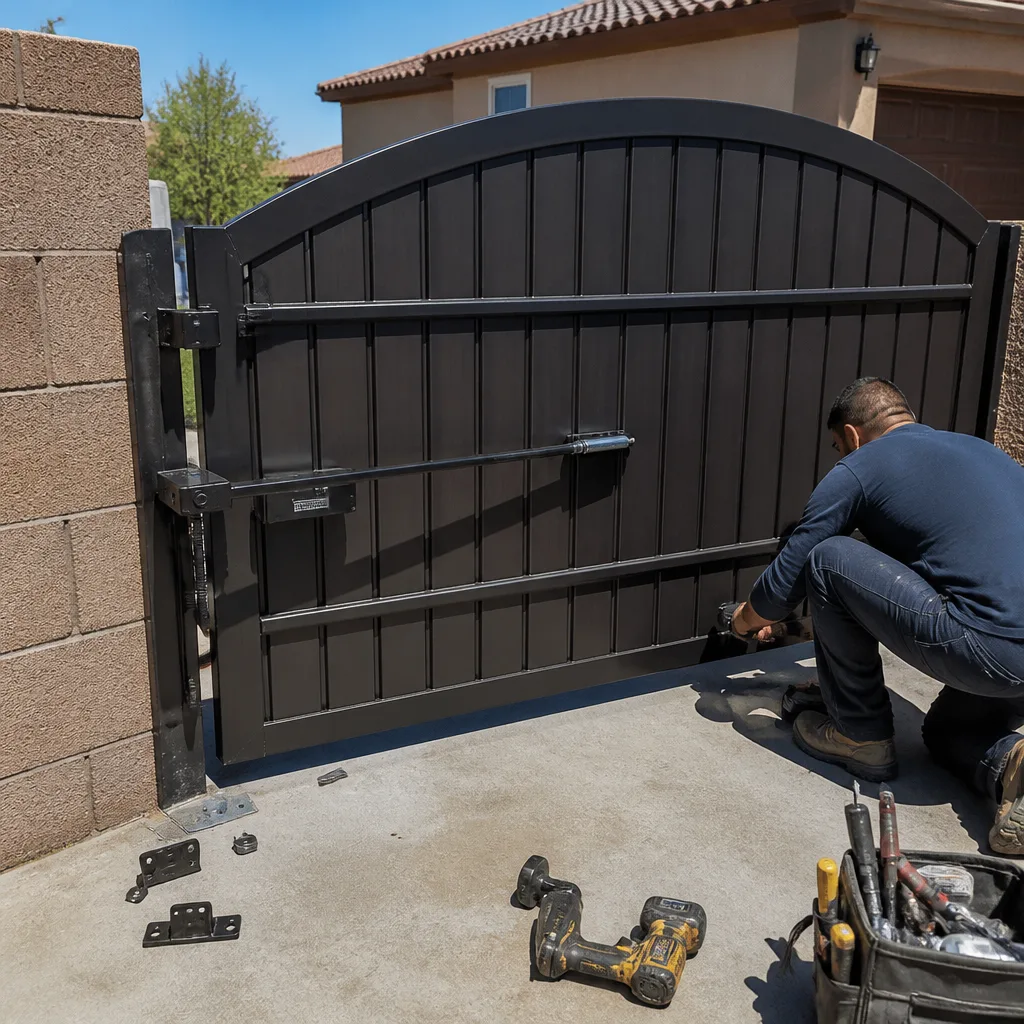
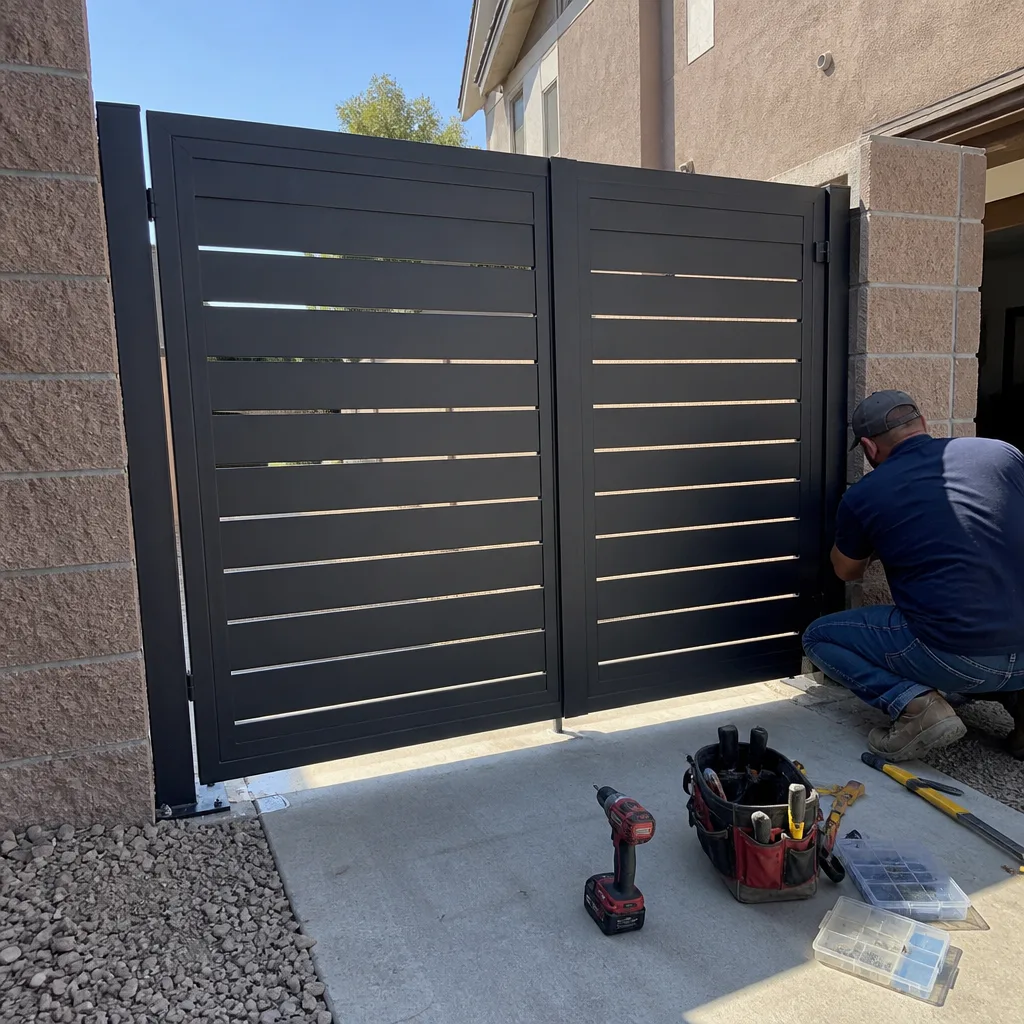 After
After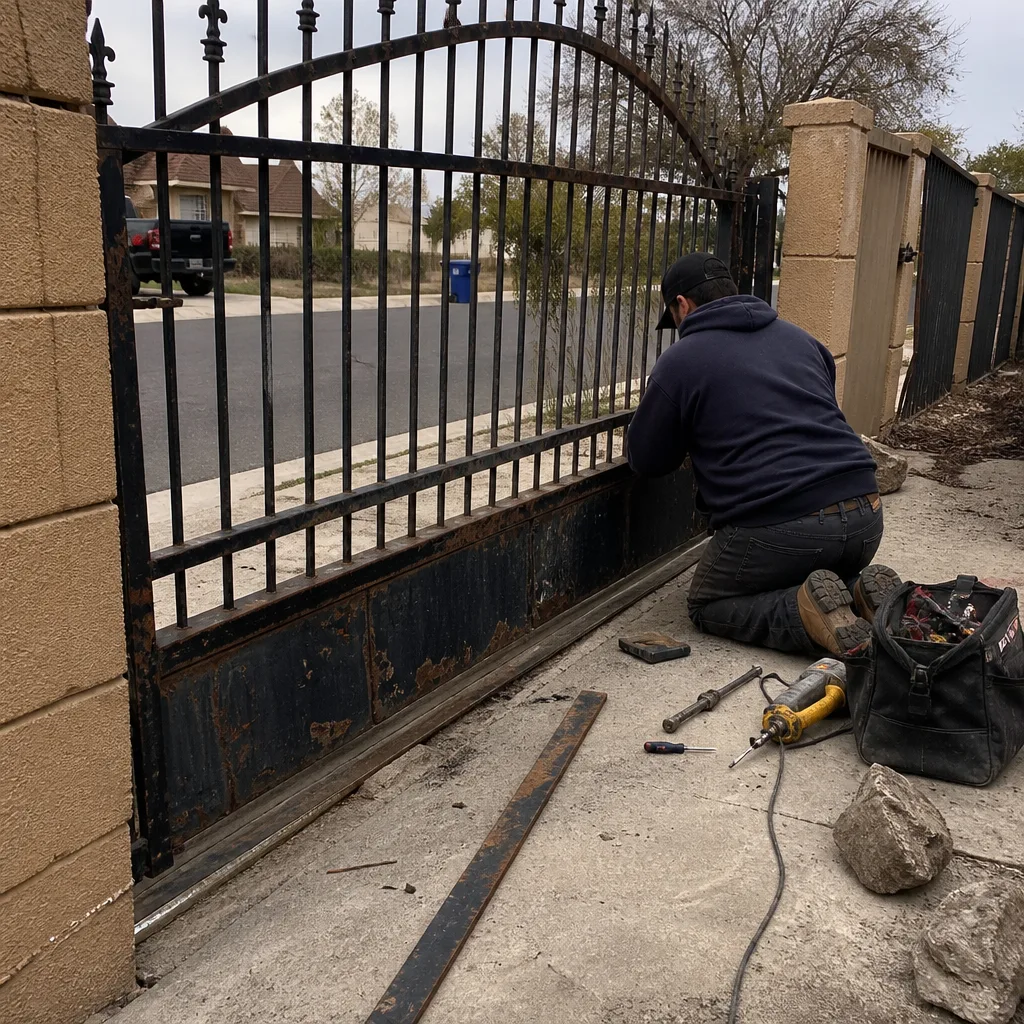 Before
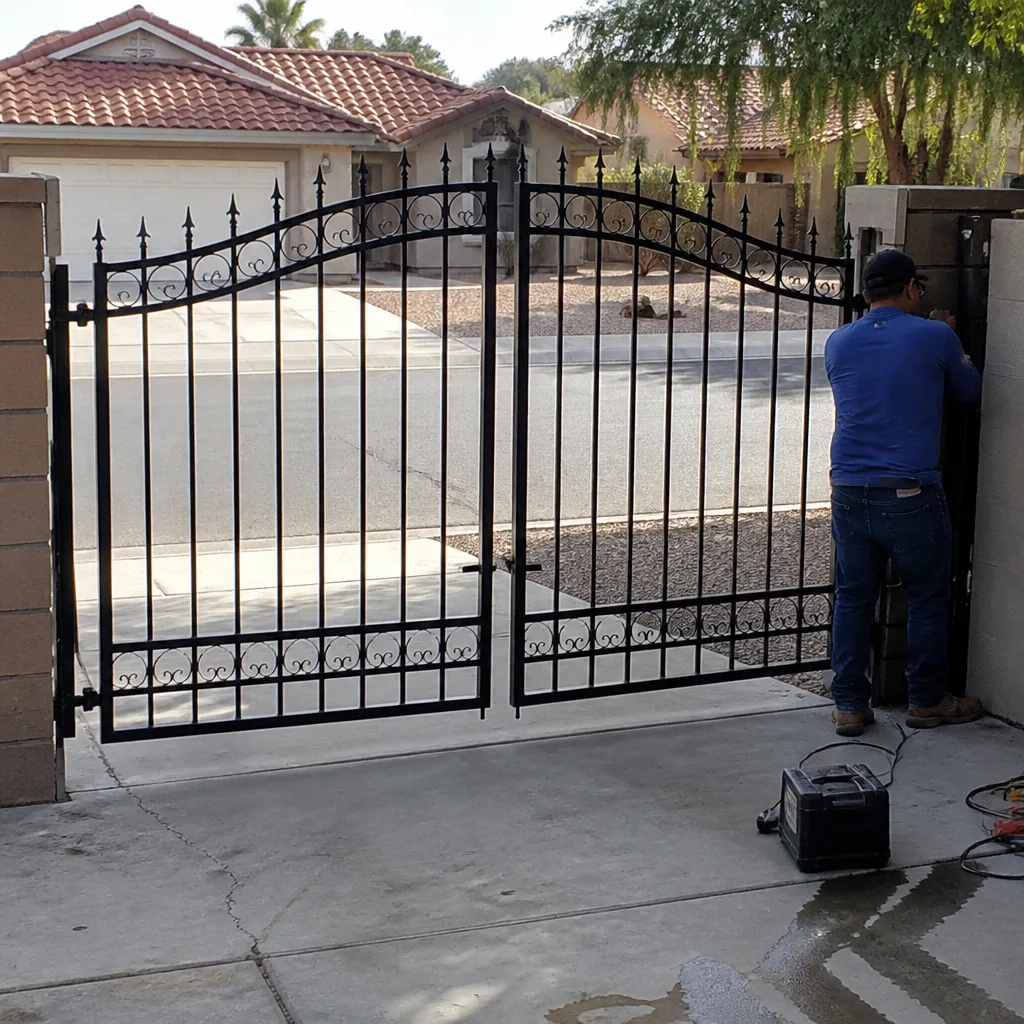 After
After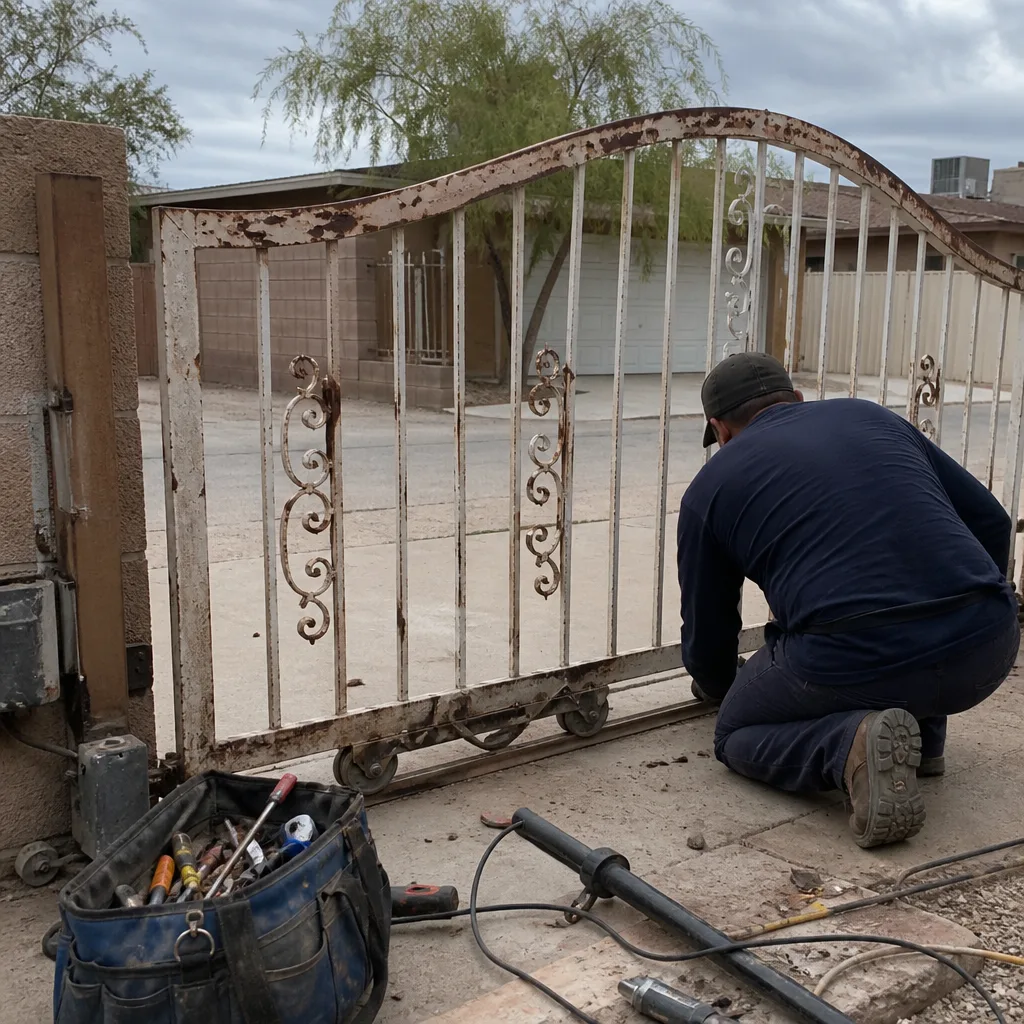 Before
 After
After